








What's Happening?
Mullah Mohammad Shirin Akhund, the Taliban governor of Kandahar, has met with Fares Haddad Zeros, the World Bank's country manager for Afghanistan, and Richard Trenchard, an official from the Food and Agriculture Organization of the United Nations (FAO).
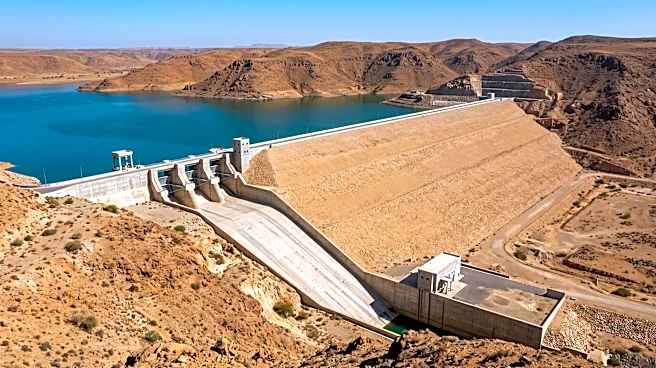
During the meeting, Governor Akhund requested the World Bank to implement several infrastructure and development projects in Kandahar province. These projects include increasing the height of the Dahla Dam, providing continued support for Mirwais Regional Hospital, constructing cold-storage facilities and check dams, expanding markets for fresh and dried fruits, and supporting alternative crops to replace narcotics cultivation. The World Bank's country manager, Fares Haddad Zeros, confirmed that the World Bank has maintained its operations in Afghanistan since the Taliban's return to power and also funds FAO activities. He added that the World Bank collaborates with local officials to execute projects aimed at strengthening the private sector and generating employment opportunities for the populace.
Why It's Important?
This development is important as it signals a potential avenue for international aid and development efforts in Afghanistan, specifically in Kandahar province, despite the current political landscape. The proposed projects address critical needs such as water management (Dahla Dam), healthcare infrastructure (Mirwais Regional Hospital), agricultural development (cold-storage, fruit markets, alternative crops), and rural infrastructure (check dams). Successful implementation of these projects could significantly improve the living conditions and economic prospects for the residents of Kandahar, a region that has faced considerable challenges. Furthermore, the focus on alternative crops to replace narcotics cultivation could have broader implications for regional stability and the fight against illicit drug trade. The World Bank's continued engagement, even under the Taliban administration, highlights the complex balance between humanitarian and development needs and political realities in Afghanistan. It also suggests a pragmatic approach from international organizations to address the dire situation on the ground.
What's Next?
Following the meeting, the next steps would likely involve detailed assessments and feasibility studies by the World Bank and FAO for the proposed projects in Kandahar. This would include evaluating the technical, financial, and social aspects of each initiative, such as the Dahla Dam height increase, hospital support, and agricultural infrastructure. The World Bank's commitment to working with local officials suggests that there will be ongoing dialogue and collaboration to ensure project alignment with local needs and effective implementation. Monitoring and evaluation mechanisms will also be crucial to ensure transparency and accountability in the use of funds and the achievement of development goals. The success of these initial projects could pave the way for further international investment and development initiatives in other parts of Afghanistan, potentially influencing the broader engagement strategy of international bodies with the current administration.
Beyond the Headlines
The engagement between the Taliban governor of Kandahar and international organizations like the World Bank and FAO carries deeper implications beyond immediate project implementation. It underscores the ongoing debate about humanitarian aid and development assistance in countries under de facto governments not widely recognized internationally. This interaction could be seen as a form of indirect engagement with the Taliban, potentially legitimizing their administration in the eyes of some, while others might view it as a necessary pragmatic step to address the severe humanitarian and economic crises in Afghanistan. The emphasis on economic development and alternative livelihoods, particularly replacing narcotics cultivation, touches upon long-standing issues of governance, security, and economic stability in the region. It also highlights the complex interplay between local governance, international development goals, and the challenges of ensuring aid reaches the intended beneficiaries without inadvertently supporting the ruling regime's political objectives.