







What's Happening?
The US Army has awarded a contract to Teledyne FLIR Defence to supply over 45 uncrewed aerial system (UAS) kits designed for chemical, biological, radiological, and nuclear (CBRN) threat detection. The contract, valued at $11.2 million, is part of the
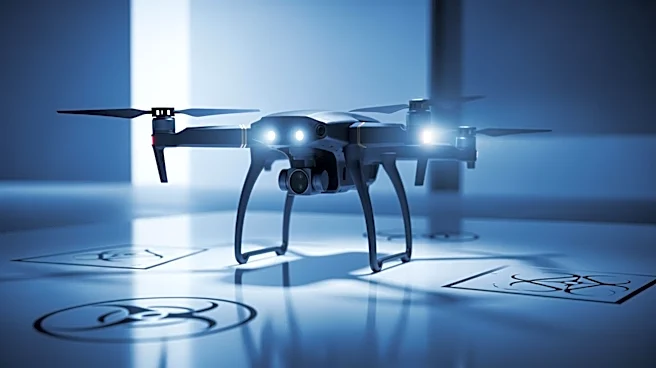
Chemical, Biological, Radiological, and Nuclear Sensor Integration on Robotic Platforms (CSIRP) program. These kits, which are expected to be delivered starting in the second quarter of 2026, will include the R80D SkyRaider drone equipped with modular sensor payloads. These payloads are designed to perform semi-autonomous searches and surveys, featuring CBRN detection functions. The kits also incorporate the MUVE B330 biological sensor and include communication and mapping tools to allow operators to gather real-time hazard information while minimizing direct human exposure. The development of these sensor kits is currently underway at facilities in Elkridge, Maryland, and West Lafayette, Indiana, with engineering support from Stillwater, Oklahoma.
Why It's Important?
This development is significant as it enhances the US Army's capabilities in detecting and responding to CBRN threats, which are critical in modern warfare and defense strategies. By integrating advanced technologies such as artificial intelligence and machine learning, the Army aims to improve its response and surveillance capabilities in environments that pose chemical, biological, radiological, or nuclear risks. The use of autonomous drones for hazard assessment reduces the risk to human soldiers, allowing for safer and more efficient operations. This contract also underscores the ongoing investment in next-generation sensing and autonomy solutions, which are crucial for maintaining a technological edge in defense capabilities.
What's Next?
The delivery of these UAS kits is scheduled to begin in the second quarter of 2026. As the kits are integrated into the Army's operations, there may be further developments in the deployment and use of these technologies in various military contexts. The success of this program could lead to additional contracts and further advancements in autonomous and sensor technologies for military applications. Stakeholders, including military leaders and defense contractors, will likely monitor the implementation and effectiveness of these systems closely.