






What's Happening?
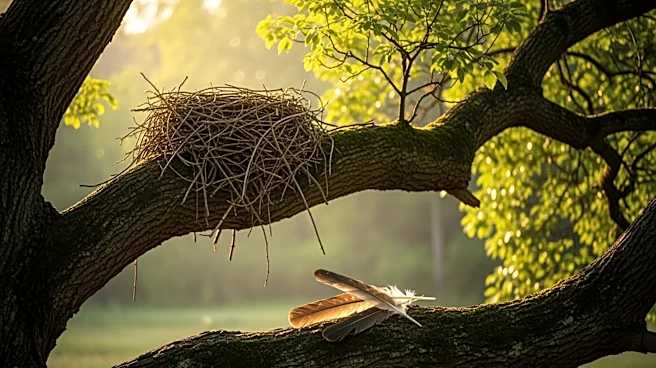
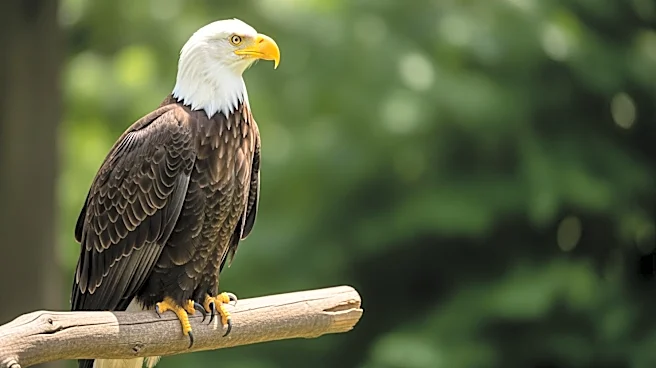
A pair of bald eagles has been observed nesting in a park within Los Angeles County, as reported by the L.A. County Department of Parks and Recreation. The eagles were seen perched on a high tree branch in an undisclosed location, according to a video
shared on Instagram. Bald eagles, being native nesting birds, are protected under federal law, which prohibits disturbing their active nests as it can disrupt breeding and impact their success. The department has advised Southern California residents to maintain a respectful distance from nesting sites and to avoid activities such as tree trimming or vegetation clearing during the nesting season. Additionally, pet owners are encouraged to keep dogs leashed and under control near potential nesting areas, and drone usage near wildlife is discouraged. In cases where a nestling appears to be in distress, the San Dimas Raptor Rescue Center is available for assistance.
Why It's Important?
The presence of bald eagles in Los Angeles County is significant as it underscores the success of conservation efforts aimed at protecting this once-endangered species. The bald eagle, a national symbol of the United States, faced severe population declines due to habitat destruction and the use of pesticides like DDT. Their resurgence in urban areas like Los Angeles County indicates a positive trend in wildlife conservation and habitat restoration. This development also highlights the importance of public awareness and cooperation in preserving natural habitats, as human activities can have detrimental effects on wildlife. The sighting serves as a reminder of the delicate balance between urban development and wildlife conservation, emphasizing the need for continued efforts to protect and support native species.
What's Next?
Moving forward, the L.A. County Department of Parks and Recreation is likely to continue monitoring the nesting site to ensure the eagles' safety and success. Public education campaigns may be implemented to raise awareness about the importance of protecting nesting sites and the role of residents in conservation efforts. Additionally, further collaboration with wildlife rescue organizations like the San Dimas Raptor Rescue Center could enhance response strategies for distressed nestlings. As urban areas continue to expand, similar conservation challenges may arise, necessitating ongoing dialogue between conservationists, local authorities, and the community to develop sustainable solutions that support both human and wildlife populations.