
What's Happening?
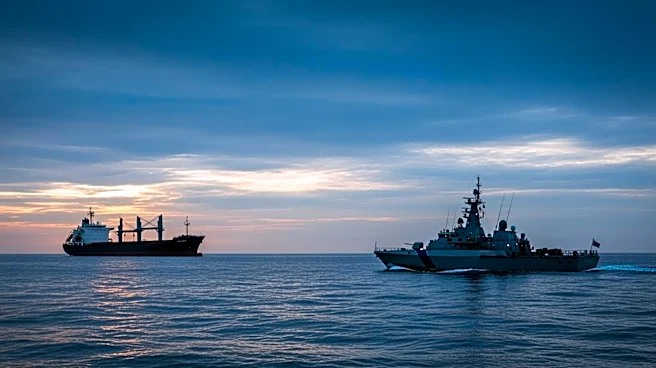
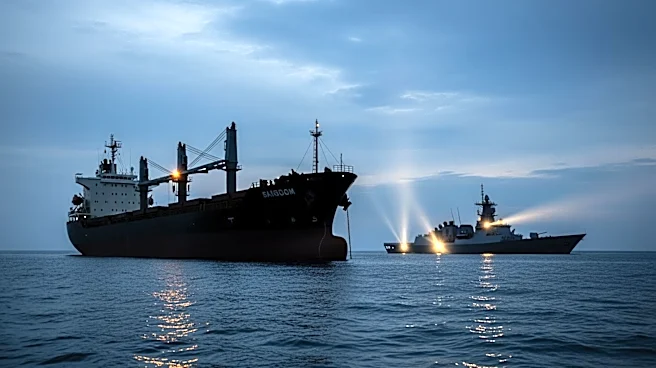
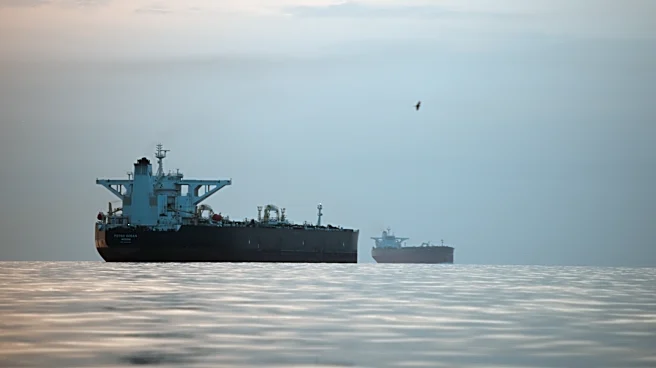
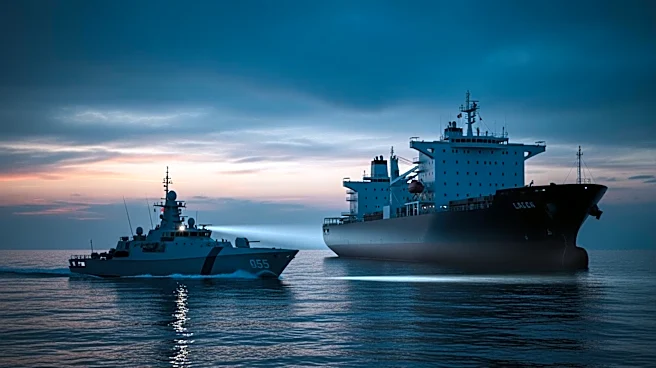
Iran's military command accused the US of violating a ceasefire by firing on an Iranian cargo ship in the Gulf of Oman. The US Navy, enforcing a blockade, intercepted the vessel, which was under US Treasury
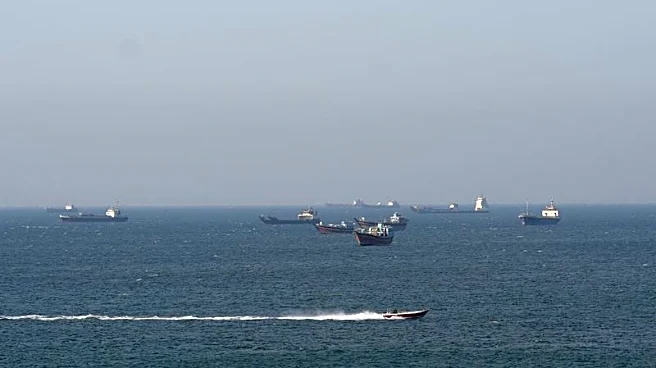
sanctions. The incident involved the USS Spruance, which disabled the ship's propulsion system before US Marines boarded it. Iran's First Vice President warned of potential high costs for global fuel prices if tensions continue. The incident highlights ongoing maritime tensions in the Strait of Hormuz, a critical oil transit route.
Why It's Important?
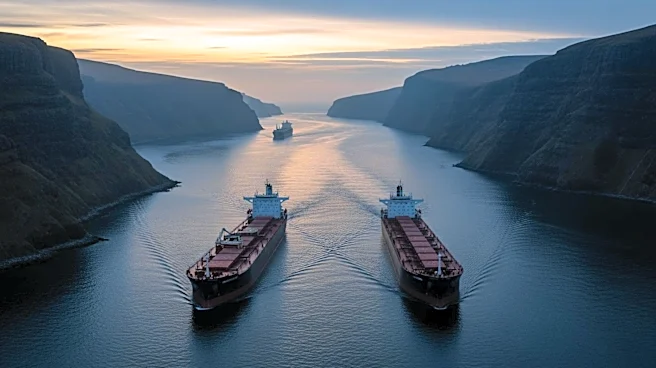
The Strait of Hormuz is a vital passage for global oil shipments, and any disruption can have significant economic implications. The US-Iran tensions in this region could lead to increased instability in global oil markets, affecting prices and supply chains. The incident also reflects broader geopolitical tensions, with potential impacts on international relations and security. The US's actions may be seen as a demonstration of military strength, while Iran's response could escalate the situation further.
What's Next?
The US and Iran may engage in further diplomatic or military actions in response to the incident. The international community, particularly countries dependent on oil from the region, will likely call for de-escalation to ensure the security of maritime routes. The situation may lead to increased military presence by the US and its allies in the region. Ongoing negotiations between the US and Iran could be affected, with potential impacts on broader diplomatic efforts.