






What's Happening?
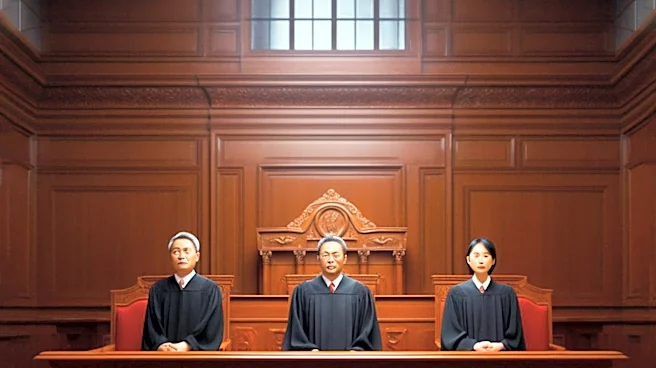
Justice Peter Odo Lifu of the Federal High Court Abuja, who was previously indicted by the Court of Appeal on June 16, 2026, for 'judicial rascality,' has continued to preside over cases, raising significant concerns about judicial integrity. The Court of Appeal had
criticized Justice Lifu for overriding its decision and nullifying the leadership of the African Democratic Congress (ADC) and its candidates, including the presidential candidate, just before the 2027 general elections. Despite the Appeal Court's strong condemnation, which described his actions as a 'brazen violation of the hierarchy of the court' and declared him 'unfit to be a judge,' Justice Lifu has reportedly issued similar rulings. This situation highlights a perceived slowness in the judicial system to address such conduct, allowing the indicted judge to continue his activities.
Why It's Important?
The continued presence of an indicted judge on the bench, especially one accused of 'judicial rascality' and overriding higher court decisions, severely undermines public confidence in the judiciary and the rule of law. Such actions can destabilize the political system, particularly during sensitive electoral periods, by creating legal uncertainty and fueling political tensions. The inability or delay in holding judges accountable for misconduct can lead to a perception of impunity, eroding the credibility of the entire justice system. This situation is critical for Nigeria's democratic stability, as fair and impartial judicial processes are essential for resolving disputes and ensuring that elections are conducted and adjudicated credibly.
What's Next?
The National Judicial Council (NJC), chaired by Chief Justice of Nigeria Justice Kudirat Kekere-Ekun, has recently taken disciplinary actions against other judicial officers for various infractions, including suspensions and warnings. This suggests a potential for the NJC to address Justice Lifu's case more decisively. There will likely be increased pressure from legal professionals, civil society, and the public for the NJC to take swift action to remove Justice Lifu from the bench to protect the integrity of the judiciary. The upcoming 2027 elections further amplify the urgency, as his continued involvement in politically sensitive cases could exacerbate electoral disputes and undermine the legitimacy of election outcomes.
Beyond the Headlines
The case of Justice Lifu exposes deeper systemic issues within the Nigerian judiciary, including the mechanisms for judicial oversight and accountability. The delay in addressing his conduct, despite a clear indictment from a higher court, raises questions about the effectiveness of internal disciplinary processes. This situation can foster a climate where judicial officers might feel emboldened to act outside established legal norms, potentially leading to a proliferation of 'judicial rascality.' The long-term implications include a weakened judiciary, increased political interference in legal matters, and a decline in public trust in the justice system. This scenario underscores the urgent need for comprehensive judicial reforms that ensure timely and effective accountability for judicial misconduct, thereby safeguarding the independence and integrity of the courts.