




What's Happening?
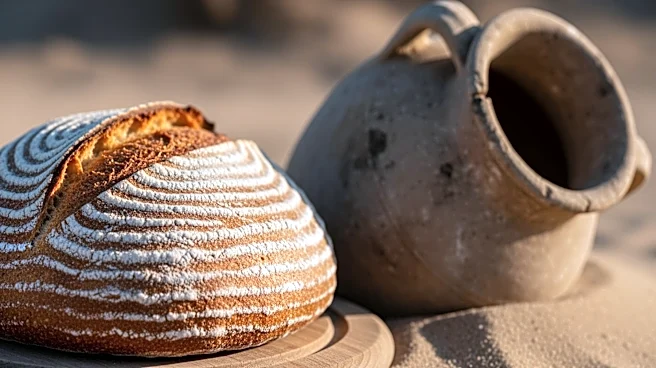
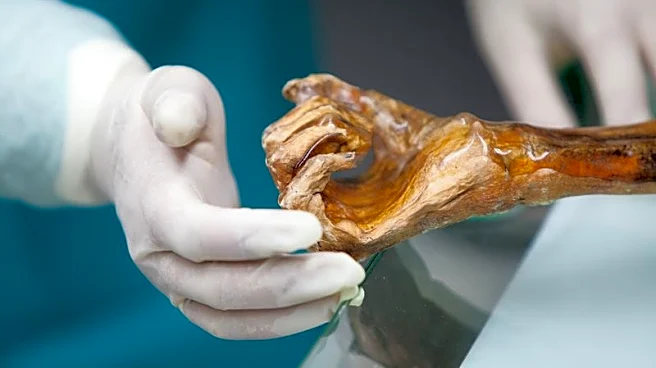
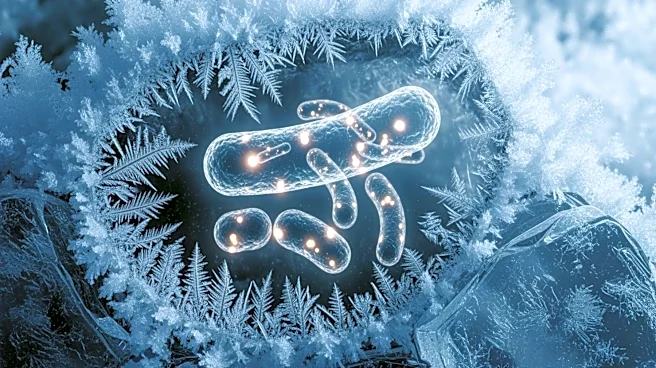
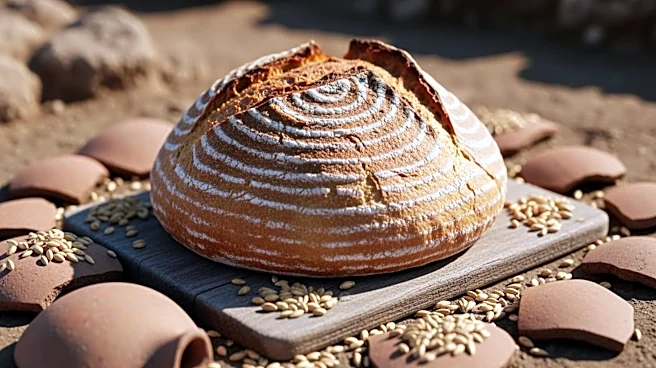
Researchers have successfully baked sourdough bread using yeast strains extracted from the remains of Ötzi the Iceman, a 5,000-year-old mummy discovered in the Alps. The yeast was harvested from microorganisms preserved in Ötzi's body, which has been
a subject of extensive study since its discovery in 1991. The team, led by microbiologist Mohamed Sarhan, managed to create a normal dough that rose within 24 hours, similar to modern yeast. The project aims to explore further applications, including brewing beer with the ancient yeast strains.
Why It's Important?
This experiment bridges ancient history and modern culinary science, offering insights into prehistoric diets and fermentation processes. It highlights the potential for ancient microorganisms to contribute to contemporary food production, possibly leading to new flavors and fermentation techniques. The project also underscores the interdisciplinary nature of scientific research, combining archaeology, microbiology, and gastronomy, and may inspire further exploration of ancient biological materials for modern applications.
What's Next?
The research team plans to collaborate with food sector specialists to explore additional applications of the ancient yeast, such as brewing beer. This could lead to new products that combine historical authenticity with modern culinary trends. The success of this project may encourage similar studies, potentially uncovering more about ancient diets and fermentation practices.