




What's Happening?
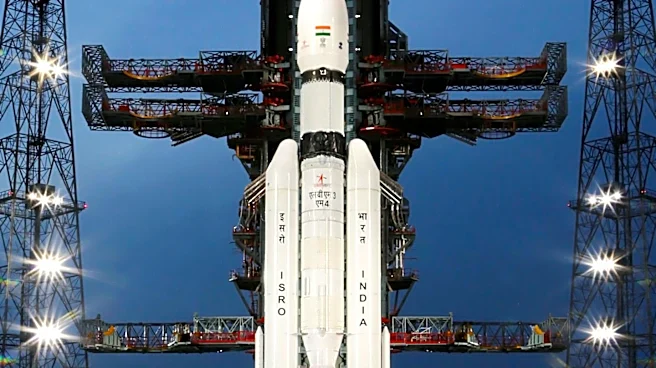
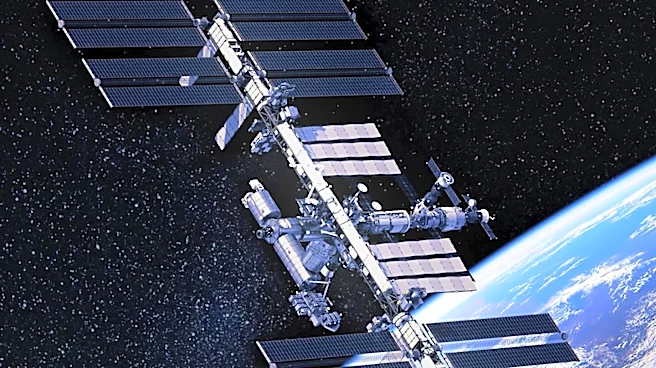
India's ambitious plans for a space station, the Bharatiya Antariksh Station (BAS), and its Gaganyaan human spaceflight mission are drawing significant attention from Chinese commentators and social media users. The Indian Space Research Organisation
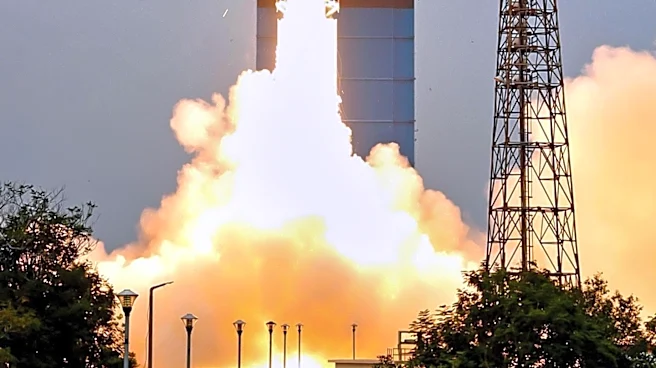
(ISRO) has confirmed that the BAS will be a five-module station, with the first module scheduled for launch by 2028 and full operational status by 2035. The Department of Space confirmed in March 2026 that system engineering and sub-system development for BAS-01 are underway, with an estimated cost of ₹1,763 crore for its development and launch. Before establishing the space station, India aims to prove its capability to safely send humans into orbit and return them, which is the objective of the Gaganyaan program. This program involves multiple unmanned missions to test the launch vehicle, crew module, escape system, life support systems, and recovery procedures. Chinese discussions include questions about India's technology, funding, and capabilities to meet these targets, with some suggesting India is attempting to match China's human spaceflight achievements.
Why It's Important?
The growing Chinese interest in India's space program highlights a significant shift in the global space landscape. Historically, India has been recognized for its cost-effective satellite launches and planetary missions, but its move towards independent human spaceflight and a modular research station signifies its emergence as a major space power. This development could intensify competition and collaboration in the space sector, particularly in Asia. For the U.S., India's advancements could present opportunities for partnerships in space exploration and technology, especially as the U.S. seeks to diversify its international collaborations. The establishment of the BAS could also contribute to global scientific research and technological innovation, potentially influencing future international space policies and resource allocation. The strategic implications of India's independent space capabilities are also noteworthy, as they could impact regional power dynamics and technological leadership.
What's Next?
India is proceeding with the development of the first module (BAS-01) of the Bharatiya Antariksh Station, with a launch target of 2028. The full five-module station is expected to be operational by 2035. Concurrently, ISRO is preparing multiple unmanned missions as part of the Gaganyaan program to test critical systems for human spaceflight, which is a prerequisite for the space station. These tests will validate the launch vehicle, crew module, escape system, life support systems, and recovery mechanisms. The progress of these missions will be closely watched by the international community, particularly China, as India aims to demonstrate its independent human spaceflight capabilities. The successful execution of these plans will solidify India's position in the global space arena and potentially open doors for further international cooperation.
Beyond the Headlines
India's pursuit of an indigenous space station and human spaceflight capabilities reflects a broader national ambition for technological self-reliance and global leadership. This initiative is not merely a scientific endeavor but also carries significant geopolitical weight, positioning India as a formidable player in the space domain alongside established powers like the U.S., Russia, and China. The focus on building capabilities around its own launch systems, industry, and scientific priorities suggests a strategic approach that prioritizes national interests and sustainable development. This could lead to a more diversified and resilient global space ecosystem, reducing reliance on a few dominant players. Furthermore, the public and governmental support for such large-scale projects can foster national pride, inspire scientific education, and drive innovation across various sectors, contributing to long-term economic and social development.