



What's Happening?
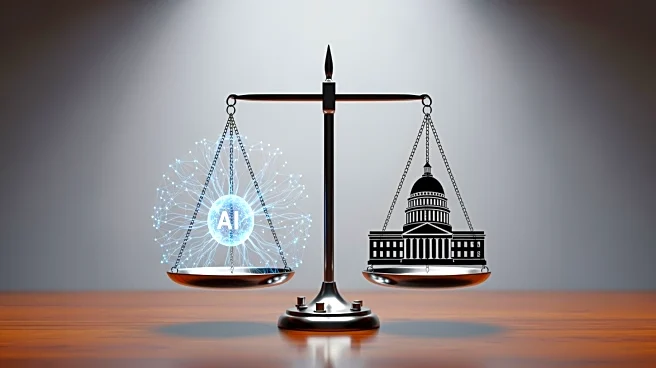
President Trump has introduced a new policy framework for regulating generative artificial intelligence, emphasizing federal oversight. The plan, known as The Trump America AI Act, was introduced by Sen. Marsha Blackburn and aims to codify Trump's 2025
AI Action Plan. The framework suggests that existing agencies and subject-matter experts should regulate AI, rather than creating a new governing body. Key areas of focus include protecting children from AI-powered deepfakes, addressing job loss due to AI, and managing infrastructure expansion like data centers. However, the plan has faced criticism for not going far enough in regulating the AI industry, with consumer advocates arguing it prioritizes promotion over protection.
Why It's Important?
The proposed AI regulation plan is significant as it seeks to centralize AI oversight at the federal level, potentially streamlining regulations across states. This could impact the tech industry by providing a unified set of rules, which some argue is necessary for the U.S. to remain competitive in the global AI race. However, the plan's perceived shortcomings in consumer protection and its focus on promoting AI could lead to increased scrutiny and debate among lawmakers, tech companies, and consumer advocacy groups. The outcome of this proposal could shape the future of AI regulation in the U.S., affecting industries reliant on AI technology.
What's Next?
The proposal will likely undergo further debate in Congress, with potential amendments to address concerns raised by consumer advocates. The tech industry may lobby for favorable terms, while consumer groups push for stronger protections. The outcome of these discussions could influence future AI legislation and regulatory practices. Additionally, state governments may continue to develop their own AI regulations, potentially leading to conflicts with federal guidelines.