






What's Happening?
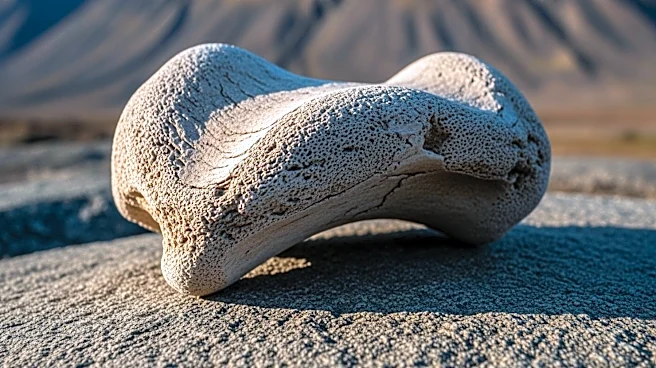
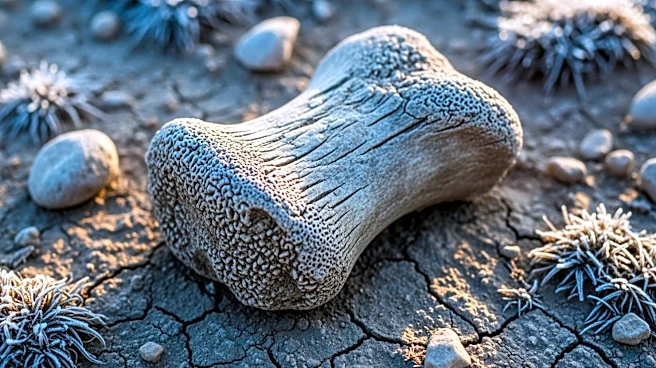
A long-standing belief that large bones found in Alaska were from woolly mammoths has been overturned by recent scientific analysis. Initially discovered in 1951 by archaeologist Otto Geist, the bones were thought to belong to mammoths due to their size
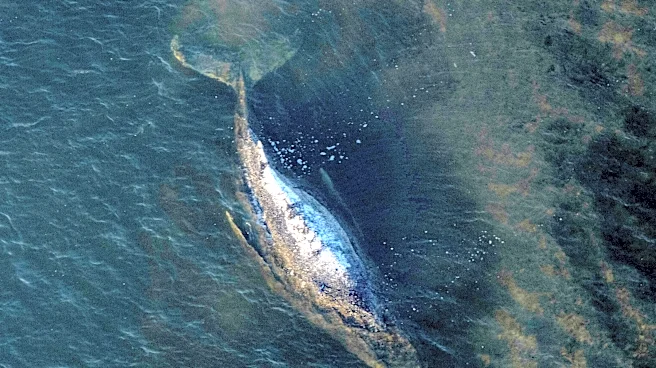
and the prevalence of Pleistocene megafauna in the region. However, radiocarbon dating by the University of Alaska Fairbanks revealed the bones to be only 2,000 to 3,000 years old, much younger than the expected timeline for mammoths. Further chemical analysis indicated the bones were from marine animals, specifically whales, found 250 miles from the nearest coastline.
Why It's Important?
This discovery challenges previous assumptions about the presence of mammoths in Alaska during the Late Holocene and highlights the importance of scientific verification in paleontological studies. The findings also raise questions about how whale remains ended up so far inland, suggesting possible ancient human activity or natural transport mechanisms. This revelation could lead to a reevaluation of other fossil identifications and prompt further research into the region's prehistoric ecology and human history.
What's Next?
Researchers may continue to explore the origins of the whale bones, considering theories such as ancient human transport or natural river routes. The study could inspire additional investigations into other fossil sites in Alaska to ensure accurate species identification. This case may also encourage museums and researchers to reexamine existing collections for potential misidentifications, using modern techniques like DNA analysis and isotopic studies.