








What's Happening?
The Commonwealth of The Bahamas has officially become the 116th member of the International Solar Alliance (ISA). High Commissioner Peter Nicholas Symonette Jr. presented the Instrument of Accession on behalf of the Bahamas during the Ninth Session of the ISA Assembly
in New Delhi. The ISA, co-founded by India and France at the 2015 UN Climate Change Conference (COP21) in Paris, aims to facilitate the adoption of affordable and reliable solar power solutions globally. Its core objectives include expanding clean energy access, strengthening energy security by reducing reliance on fossil fuel imports, and accelerating the energy transition to reduce carbon emissions. The alliance specifically prioritizes assistance for vulnerable regions, such as Least Developed Countries (LDCs) and Small Island Developing States (SIDS), which often face significant energy and environmental challenges.
Why It's Important?
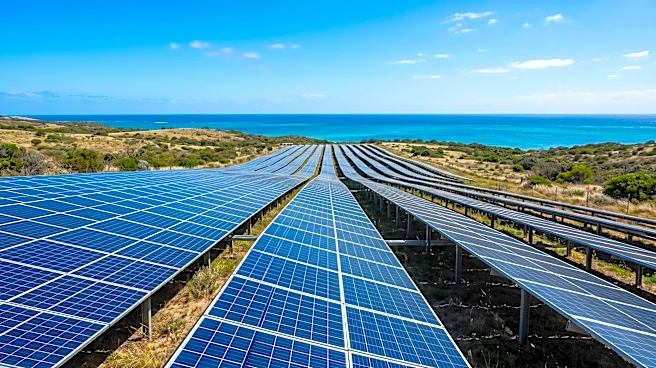
For Small Island Developing States like the Bahamas, ISA membership is strategically important. These nations frequently depend heavily on imported diesel fuel, leading to high electricity costs for their citizens. Solar technology offers a reliable alternative to diversify national energy grids, providing off-grid power delivery to isolated communities, health clinics, and schools. This reduces fuel import reliance, supports global actions against rising sea levels and global warming through zero-emission power, and fosters economic growth by creating local technical jobs in installation and system maintenance. Joining the ISA grants the Bahamas access to global technical knowledge, shared research, and collaborative funding frameworks specifically designed for island infrastructure, laying a strong foundation for future clean energy development.
What's Next?
While the immediate announcement does not detail specific solar projects, the Bahamas' accession establishes a framework for future clean energy initiatives. The ISA Assembly, as the primary decision-making body, will continue to set policies and review global clean energy initiatives, which the Bahamas will now be a part of. This membership is expected to facilitate access to specialized solar energy solutions tailored for island power grids, global expertise, and clean technology networks. The partnership will likely lead to the development and implementation of solar projects aimed at enhancing energy independence, reducing operational costs, and contributing to climate resilience within the Bahamian archipelago.
Beyond the Headlines
The Bahamas' move to join the ISA highlights a broader global trend among vulnerable nations to proactively address climate change and energy security through renewable sources. This decision underscores the recognition that solar power is not merely an environmental solution but also a critical tool for economic stability and national development, particularly for countries susceptible to the impacts of climate change and volatile fossil fuel markets. The collaboration within the ISA fosters a model of international cooperation where shared knowledge and resources can empower smaller nations to overcome significant infrastructural and financial hurdles in their energy transition, potentially inspiring other SIDS to follow suit and collectively strengthen global climate action.