





What's Happening?
Texas A&M University's Department of Entomology has been a long-standing leader in training military medical entomologists, a critical field dedicated to protecting U.S. service members from vector-borne diseases worldwide. This program, which dates back
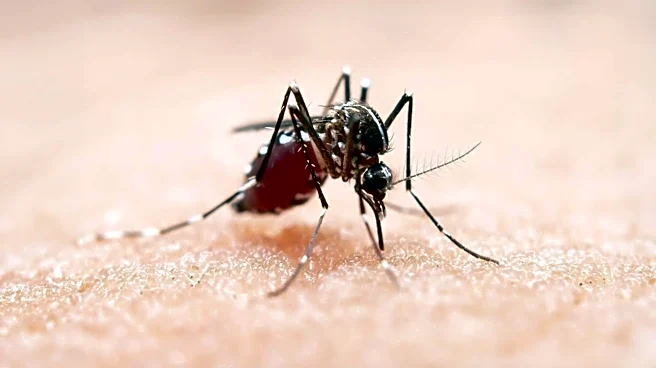
to the late 1800s when the link between insects and disease transmission was discovered, gained significant importance during World War II when malaria incapacitated more American soldiers in the South Pacific than combat. Dr. Pete Teel, a Regents Professor and Navy veteran, highlights Texas A&M's role in mentoring generations of military officers. These entomologists, serving in the Army, Navy, and Air Force, travel globally to sample arthropods like ticks, biting flies, and mosquitoes, monitoring for disease-causing pathogens. They also develop and implement preventive measures, including population control and exposure reduction strategies for military personnel. The university's program is recognized by the military for its strong reputation, rigorous curriculum, and relevant research, ensuring that officers receive advanced degrees tailored to military timelines.
Why It's Important?
The work of military medical entomologists trained at institutions like Texas A&M is vital for national security and global public health. Vector-borne diseases, which cause over 700,000 deaths worldwide annually, pose a significant threat to military readiness and operations. By protecting service members from illnesses like malaria, yellow fever, and those transmitted by ticks, these specialists ensure that troops can remain healthy and effective in diverse environments. This specialized training prevents a recurrence of historical challenges, such as those faced during World War II, where disease significantly impacted military strength. The program's focus on integrated preventive measures not only safeguards U.S. personnel but also contributes to global health security by collaborating with foreign governments and responding to disease outbreaks following natural disasters. Texas A&M's consistent leadership in this field underscores the strategic importance of academic-military partnerships in addressing complex biological threats.
What's Next?
Texas A&M University will continue to serve as a crucial training ground for military medical entomologists, adapting its curriculum and research to address evolving global health threats and new vector-borne diseases. The program will likely maintain its focus on intensive, three-year doctoral programs designed to align with military timelines, ensuring a steady supply of highly skilled officers. Future efforts may involve expanding research into emerging pathogens, developing advanced surveillance technologies, and refining integrated pest management strategies. Collaboration with international partners and foreign governments will remain a key component, as military entomologists work to build global capacity for disease prevention and response. The university may also seek to raise awareness among students about the unique career opportunities in military medical entomology, encouraging more individuals to pursue this specialized field to protect both military personnel and global populations from vector-borne illnesses.
Beyond the Headlines
The enduring legacy of military medical entomology, exemplified by Texas A&M's program, highlights a less visible but profoundly impactful aspect of national defense and international relations. This field transcends traditional military roles, blending scientific expertise with humanitarian efforts, particularly in disaster relief and global health initiatives. The continuous need for such specialists underscores the persistent challenge posed by infectious diseases, which often exploit environmental changes and human movement. Ethically, the program reflects a commitment to the well-being of service members, acknowledging that health is a fundamental component of operational effectiveness. Culturally, it represents a unique intersection of academic rigor, military discipline, and a shared sense of duty to confront microscopic adversaries for a larger cause, demonstrating how specialized scientific knowledge can be leveraged for broad societal benefit and global stability.