

What's Happening?
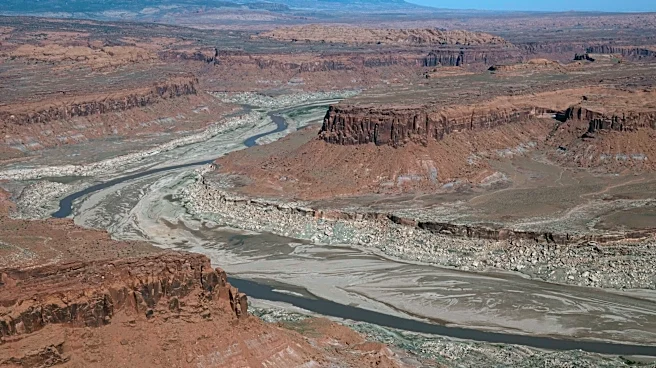
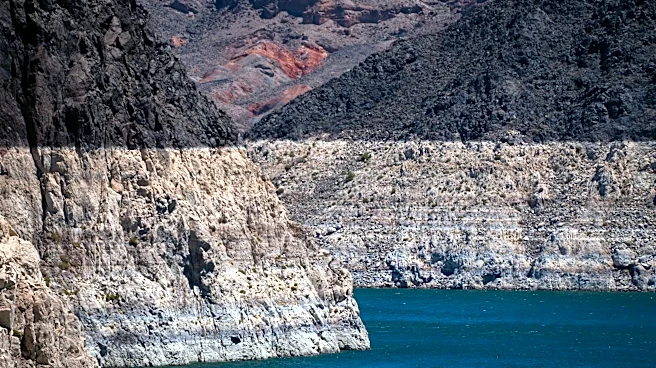
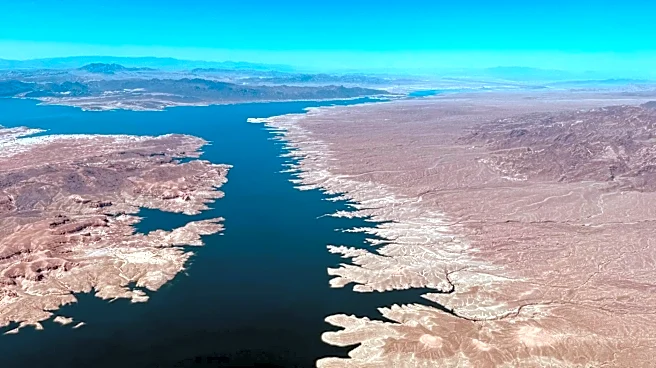
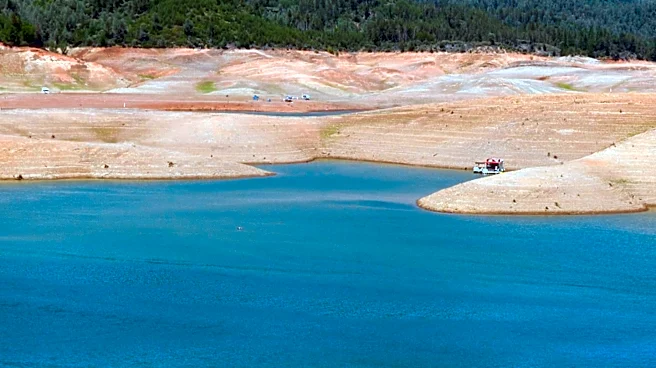
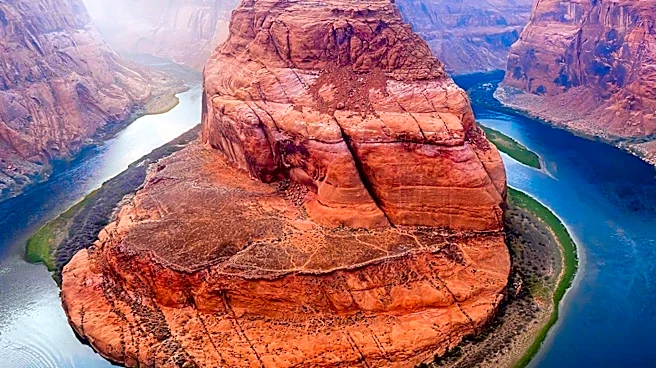
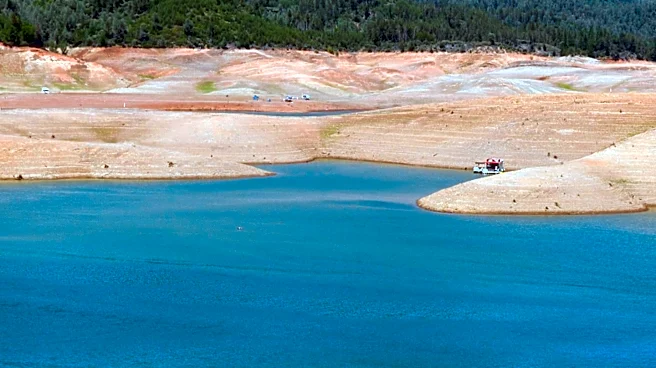
Lake Mead, the largest reservoir in the United States, has reached its lowest water level since it was filled 90 years ago. The reservoir, located on the Arizona-Nevada border, recorded a water level of 1,040.4 feet above sea level, according to federal
data. This drop is attributed to prolonged drought conditions and overuse of the Colorado River, which supplies water to 40 million people across seven U.S. states, tribal nations, and Mexico. The situation is exacerbated by the worst snowpack on record for the Colorado River Basin, affecting water availability for farmers, industries, and hydropower producers. Federal officials have proposed a short-term plan to reduce water usage among the Lower Basin states of Arizona, California, and Nevada to manage the dwindling resource.
Why It's Important?
The declining water levels in Lake Mead highlight the severe water crisis affecting the Colorado River system, which is crucial for millions of people and various industries. The situation poses significant challenges for water management and allocation among the states that rely on the river. The crisis also threatens the production of hydropower, which is vital for energy supply in the region. The federal proposal to reduce water usage aims to prevent further depletion, but it underscores the need for long-term solutions to address the impacts of climate change and resource overuse. The situation calls for collaborative efforts among states to ensure sustainable water management and mitigate the effects of prolonged drought.
What's Next?
Federal officials and state governments are expected to continue negotiations to reach a long-term agreement on water allocation from the Colorado River. The proposed short-term plan allows for flexibility in water cuts, depending on the severity of drought conditions. Stakeholders, including farmers, industries, and environmental groups, will likely be involved in discussions to balance water needs and conservation efforts. Monitoring of water levels and climate conditions will be crucial in guiding future decisions. The situation may also prompt increased investment in water conservation technologies and infrastructure to enhance resilience against climate impacts.