




What's Happening?
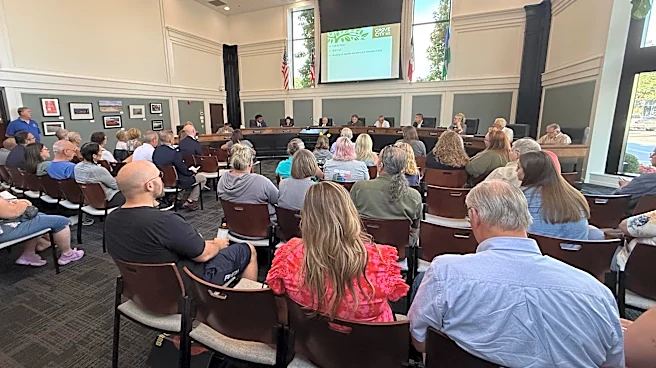
The Tacoma City Council recently convened to discuss a range of local issues, including tourism, legislative priorities, and employee compensation. During an economic development briefing, Visit Tacoma–Pierce County President and CEO Dean Burke presented
an assessment of the World Cup's impact on hotel room nights, noting nearly 10,000 World Cup-related room nights, which was comparable to a girls' gymnastics event. The council also reviewed draft state and federal legislative agendas, focusing on city finances, protection against unfunded state highway transfers, and support for shelter and housing needs. Additionally, the council adopted Resolution No. 42030, approving a three-year agreement for approximately 143 Teamsters Local 313 positions, which included a 3% general wage increase and a 2% market rate adjustment for 2026. An amendment corrected transposed percentages in the resolution, though Labor Relations Division Manager Dylan Carlson confirmed no change to the fiscal impact. Resolution No. 42031 was also adopted to rectify a wage calculation error affecting a Tacoma Venues and Events classification. City Manager Hyun Kim announced a potential $70,000 state grant for permitting improvements, and Councilmember Sandesh Sadalge reported reaffirming Tacoma’s sister city relationship with Wuhan, China, through a 10-year memorandum.
Why It's Important?
These actions by the Tacoma City Council are important for several reasons. The focus on tourism, particularly the analysis of major events like the World Cup, highlights the city's efforts to understand and maximize economic benefits from visitors, which directly impacts local businesses and employment in the hospitality sector. The legislative priorities, including concerns about city finances and unfunded state mandates for infrastructure, underscore the ongoing challenges local governments face in maintaining essential services and infrastructure without adequate state or federal support. This could influence future state-local relations and funding models. The approval of the employee compensation agreement for Teamsters Local 313 positions is crucial for labor relations and the financial well-being of city employees, potentially setting a precedent for future labor negotiations and ensuring stability in public services. Correcting wage calculation errors also demonstrates a commitment to fair compensation and transparent financial practices within city operations. The reaffirmation of the sister city relationship with Wuhan, China, signifies Tacoma's engagement in international diplomacy and cultural exchange, which can foster economic and cultural ties.
What's Next?
The Tacoma City Council will continue to deliberate on its proposed federal agenda, which addresses affordable housing funds, transportation and water infrastructure, emergency medical services, and oversight of federal detention facilities, with further discussions scheduled for November 3 and a joint study session with Tacoma Public Utilities on November 17, potentially leading to an adoption resolution on December 1. The potential $70,000 state grant for permitting improvements will be brought to the council for consideration in the 2027–28 budget, indicating future investments in city efficiency. The tax measures, Ordinance No. 29120, which would increase certain utility tax rates to fund the Streets Initiative Fund, and Ordinance No. 29121, updating business and occupation tax definitions, are scheduled for a final reading on October 6. These measures will directly impact city revenue and local businesses. The 'Week Without Driving' initiative, proclaimed for October 1–8, will encourage residents and officials to use alternative transportation, potentially influencing future urban planning and public transit investments based on feedback and observations during this period.
Beyond the Headlines
Beyond the immediate policy decisions, the council's discussions reveal deeper implications for Tacoma's urban development and governance. The debate over state-transferred infrastructure without adequate funding, exemplified by the $70 million deferred maintenance on a bridge, highlights a systemic issue where local governments bear the burden of state-level decisions, potentially leading to infrastructure decay or increased local taxation. Councilmember Sadalge's comment, 'We tax poor people to help poor people, and it doesn’t really work,' points to a fundamental challenge in municipal finance and equity, suggesting a need for innovative revenue tools that do not disproportionately affect lower-income residents. The emphasis on the loss of local reporting capacity and the city's use of its own platforms to communicate directly with the public raises questions about the evolving landscape of local journalism and government transparency. While direct communication can be efficient, it also underscores the importance of independent media in holding government accountable. The sister city relationship with Wuhan, China, while seemingly a diplomatic gesture, could also open avenues for economic partnerships and cultural exchange, influencing Tacoma's global standing and local diversity.