







What's Happening?
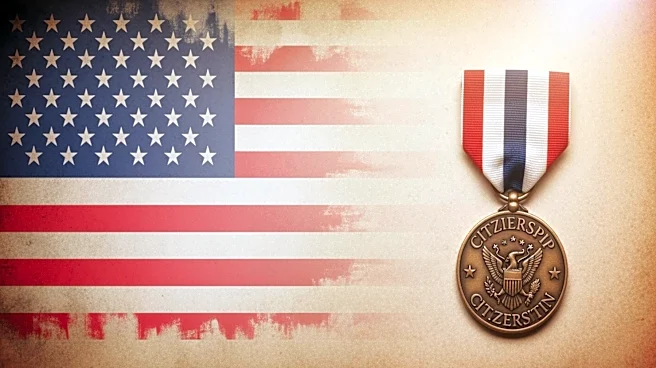
'I Am an American Day' was a historical holiday celebrated in May to promote American citizenship and 'Americanism.' The day encouraged immigrants to assimilate into American culture, often expecting them to leave their cultural identities behind. The holiday is now
largely forgotten, but it once played a significant role in shaping public perceptions of immigration and citizenship in the United States. The celebration was part of a broader movement to promote national unity and identity, though it did not equally welcome all immigrants.
Why It's Important?
The historical context of 'I Am an American Day' sheds light on past attitudes towards immigration and citizenship in the United States. The holiday's emphasis on assimilation reflects a period when cultural diversity was less celebrated, and immigrants were expected to conform to a singular American identity. Understanding this history is important for contemporary discussions on immigration policy and multiculturalism, as it highlights the evolution of American attitudes towards diversity and inclusion. The holiday's legacy continues to influence debates on how best to integrate immigrants into American society while respecting their cultural backgrounds.
Beyond the Headlines
The legacy of 'I Am an American Day' raises questions about the balance between national identity and cultural diversity. The holiday's approach to assimilation contrasts with modern views that celebrate multiculturalism and the contributions of diverse communities to American society. This historical perspective can inform current policy discussions on immigration and citizenship, emphasizing the need for inclusive approaches that recognize and value cultural differences. The holiday's history also serves as a reminder of the challenges faced by immigrants in maintaining their cultural identities while integrating into American society.