
What's Happening?
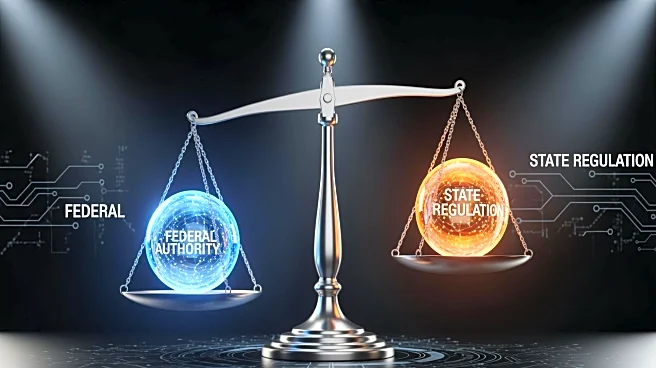
President Trump has issued an executive order aimed at preventing states from enacting stringent regulations on artificial intelligence (AI). This order specifically targets Colorado's AI law, which was
set to be the first of its kind in the nation. The Colorado law, passed in 2024, aims to prevent discrimination in AI systems used by businesses and governments for decisions in hiring, education, and banking. Trump's order criticizes the law for potentially forcing AI models to produce false results to avoid differential treatment of protected groups. The executive order calls for a minimally burdensome national AI standard and threatens to restrict federal funding to states that do not comply. Colorado Attorney General Phil Weiser has expressed intent to challenge the order in court, arguing that withholding federal funds is unlawful and unconstitutional.
Why It's Important?
The executive order has significant implications for the regulation of AI across the United States. By attempting to establish a national standard, the Trump administration seeks to centralize control over AI policy, potentially stifling state-level innovation and regulation. This move could impact industries reliant on AI, such as technology, finance, and education, by limiting their ability to address discrimination and transparency issues. Colorado's law was designed to increase transparency and allow individuals to correct data and appeal discriminatory decisions made by AI systems. The order's challenge to state autonomy in regulating AI could lead to legal battles and influence future legislative efforts in other states.
What's Next?
Colorado plans to challenge the executive order in court, with Attorney General Weiser leading the effort. State lawmakers, including Democratic Rep. Brianna Titone, are preparing to introduce legislation to amend Colorado's AI law before it goes into effect. The amendments aim to improve transparency and accountability in AI systems. Meanwhile, the Colorado Technology Association is working with the Governor's AI Policy Working Group to update the law, ensuring it supports innovation while maintaining consumer trust. The outcome of these legal and legislative efforts will likely shape the future of AI regulation in Colorado and potentially influence national policy.