


What's Happening?
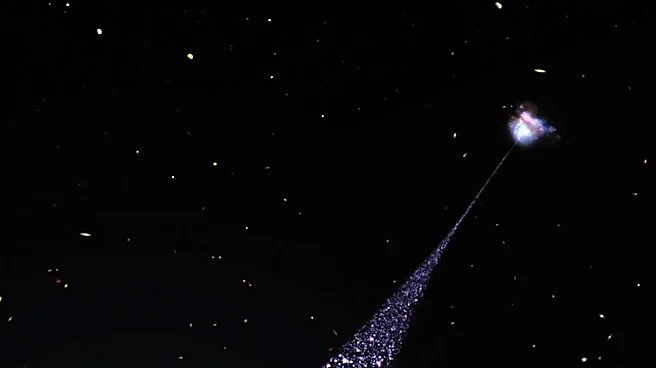
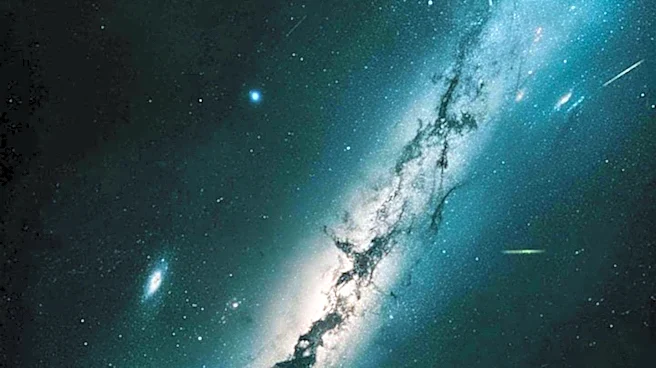
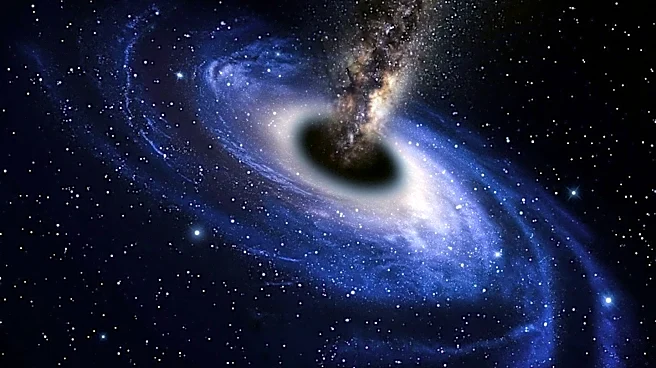
Scientists have discovered evidence that our Milky Way galaxy absorbed a smaller dwarf galaxy approximately 11.8 billion years ago, when the universe was less than 15 percent of its current age. This event represents the earliest-known galactic merger
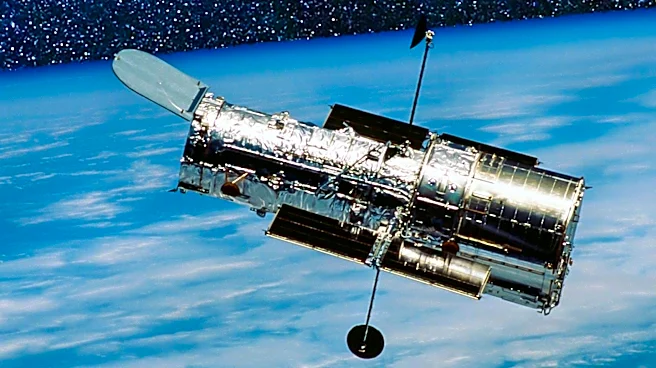
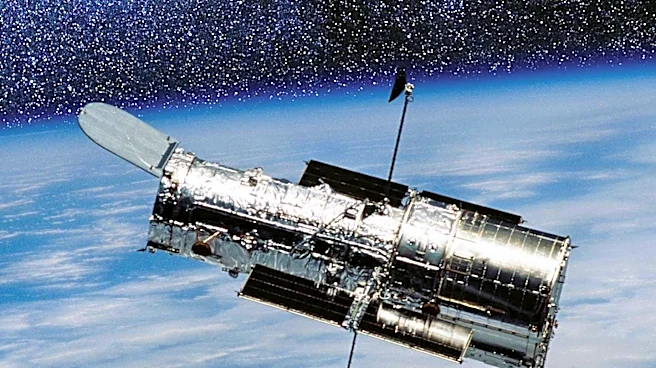
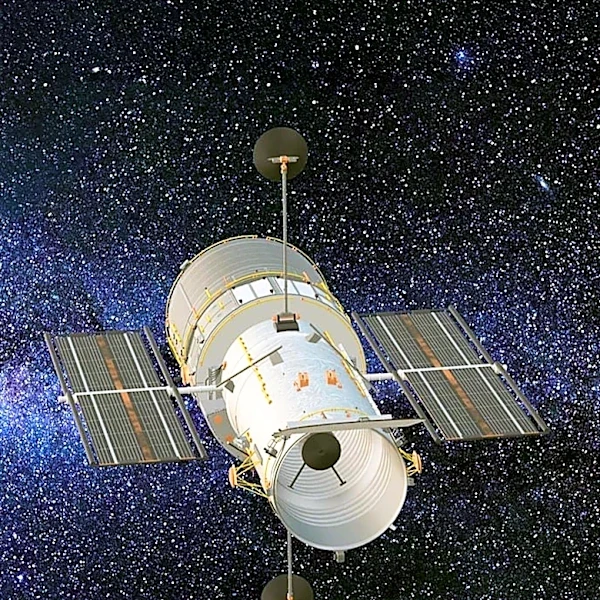
for the Milky Way and demonstrates that its growth was fueled not only by internal star formation but also by merging with smaller galaxies caught in its gravitational pull. Astrophysicist Davide Massari of the National Institute for Astrophysics in Bologna, Italy, lead author of the study published in Nature Astronomy, stated that this is the unambiguous discovery of the first merger event experienced by our galaxy in its infancy. Researchers used the Hubble and Gaia telescopes to study stellar clusters near the Milky Way's center, analyzing their age, chemical composition, and trajectory. The dwarf galaxy, named Low-energy-Kraken-Heracles (LKH), contained stars with a mass equivalent to 500 million times that of the sun at the time of the merger, about a quarter the size of the Milky Way then. The merger is described as "peaceful" for stars but "explosive" for gas, likely triggering significant star formation.
Why It's Important?
This discovery is crucial for understanding the formation and evolution of our own Milky Way galaxy. It provides direct evidence of a significant merger event that occurred very early in the galaxy's history, shedding light on how it accumulated mass and grew to its current size. The finding supports the theory that galactic mergers are a fundamental mechanism for galaxy growth, especially in the early universe. By identifying the LKH dwarf galaxy and its impact, scientists can better reconstruct the Milky Way's past, including the origins of some of its oldest stars and the distribution of dark matter. This research also helps to contextualize subsequent merger events in the Milky Way's history, such as those with the Gaia-Sausage-Enceladus dwarf galaxy and the Sagittarius dwarf galaxy, providing a more complete timeline of our galaxy's development. Understanding these early mergers is essential for comprehending the conditions that eventually led to the formation of our solar system and Earth.
What's Next?
Future research will likely involve further analysis of stellar clusters within the Milky Way's inner regions to identify more stars originating from the LKH dwarf galaxy. This will help to map the remnants of this ancient merger and understand its full impact on the Milky Way's structure and composition. Scientists will continue to use advanced telescopes like Hubble and Gaia, and potentially next-generation observatories, to search for evidence of even earlier merger events or other significant interactions that shaped our galaxy. The study of the chemical composition of these ancient stars could provide more clues about the conditions in the early universe and the processes of star formation triggered by galactic collisions. This ongoing work aims to build a more detailed and accurate timeline of the Milky Way's evolutionary history, contributing to a broader understanding of galaxy formation across the cosmos.
Beyond the Headlines
The revelation that our Milky Way galaxy is a product of ancient cosmic collisions offers a profound perspective on our place in the universe. It highlights the dynamic and often violent processes that underpin the formation of large-scale structures. This understanding connects us directly to the deep past of the cosmos, showing that the very stars we see today may have originated in a different, smaller galaxy that was absorbed into our own. It underscores the idea that galaxies are not static entities but are constantly evolving through interactions and mergers. This perspective can foster a deeper appreciation for the complex and interconnected history of the universe, reminding us that even seemingly stable structures like our galaxy have undergone dramatic transformations over billions of years, ultimately influencing the conditions that allowed for the emergence of life.