



What's Happening?
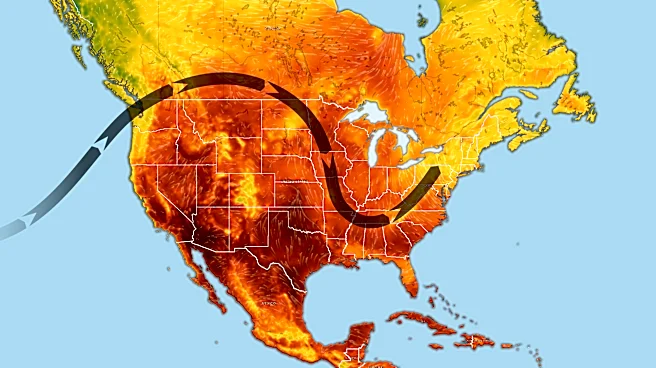
Research from the University of California, Riverside indicates that the Atlantic Meridional Overturning Circulation (AMOC), a major ocean current, is slowing down. This slowdown is attributed to human-induced climate change and could lead to stronger
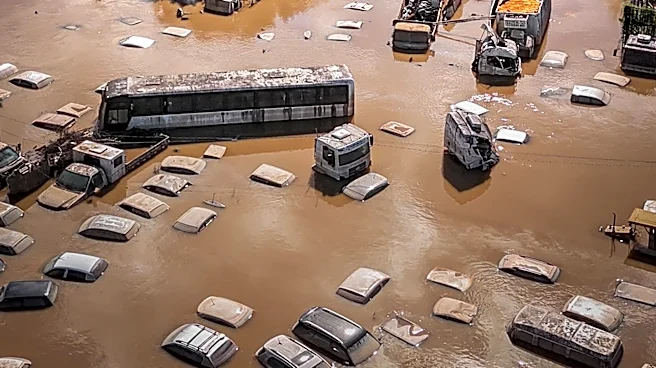
storms along the California coast. The AMOC functions as a global conveyor belt, moving warm water northward and influencing climate patterns. As it weakens, it may alter ocean temperatures and atmospheric conditions, increasing the intensity of atmospheric rivers—narrow bands of moisture that transport water vapor from tropical regions to higher latitudes. These atmospheric rivers are crucial for California's water supply but can also cause severe flooding and damage.
Why It's Important?
The potential intensification of storms due to a weakening AMOC could have significant implications for California's infrastructure and water management. Stronger atmospheric rivers could lead to more frequent and severe flooding, threatening communities and ecosystems. However, they also present an opportunity to enhance water collection if forecasting and storage systems are improved. The study underscores the interconnectedness of global climate systems, where changes in one region can have far-reaching effects. Understanding these dynamics is crucial for preparing for future shifts in water resources and extreme weather events.
What's Next?
If greenhouse gas emissions remain high, the AMOC is expected to continue weakening, potentially exacerbating storm patterns along the California coast. This scenario calls for urgent action to reduce emissions and mitigate climate change impacts. Policymakers and communities may need to invest in infrastructure improvements and adaptive strategies to manage increased water flow and prevent damage. Enhanced forecasting and expanded water storage systems could help capitalize on the additional water supply while minimizing risks.
Beyond the Headlines
The research highlights the broader implications of climate change on global weather patterns and water resources. A slowing AMOC not only affects the Atlantic region but also has the potential to shift storm patterns worldwide, impacting ecosystems and human societies. This underscores the need for comprehensive climate policies and international cooperation to address the root causes of climate change and build resilience against its effects.