





What's Happening?
The United Nations Conference on Trade and Development (UNCTAD) released a report indicating a significant shift in global trade partnerships. Since the onset of the Russia-Ukraine war in 2022, trade alliances based on political proximity, known as 'friendshoring,'
have gained strength, while those based on geographical proximity, or 'nearshoring,' have weakened. The report, titled 'Global Trade Continues to Evolve Amid Rising Price Pressures,' was published in Geneva on July 22, 2026. It highlights a decrease in trade interdependence between the US and both the European Union (EU) and Canada, while trade between the EU and Canada, as well as Canada and China, has increased. The report also notes a decline in trade dependency between the US and Japan, and a widening gap in trade dependence between the US and China.
Why It's Important?
This shift in trade dynamics is significant as it reflects changing geopolitical and economic landscapes. The decrease in US trade interdependence with traditional allies like the EU and Canada could impact US economic influence and its ability to leverage trade relationships for political and economic gains. The increase in trade between Canada and China, and the EU and Canada, suggests a diversification of trade partnerships, potentially reducing reliance on the US. This could lead to a realignment of global trade networks, affecting industries and economies dependent on US trade policies. Additionally, the report highlights rising trade costs due to geopolitical tensions, which could lead to higher consumer prices and impact global economic stability.
What's Next?
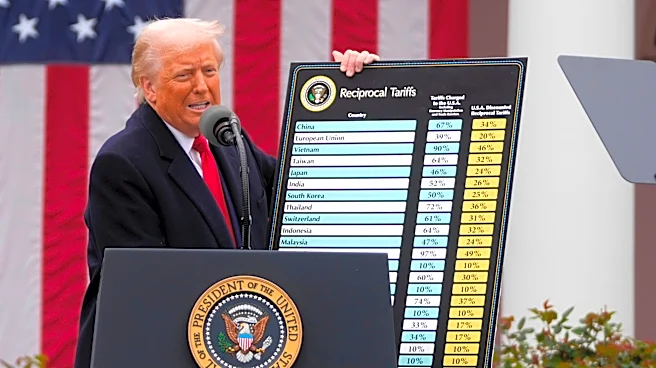
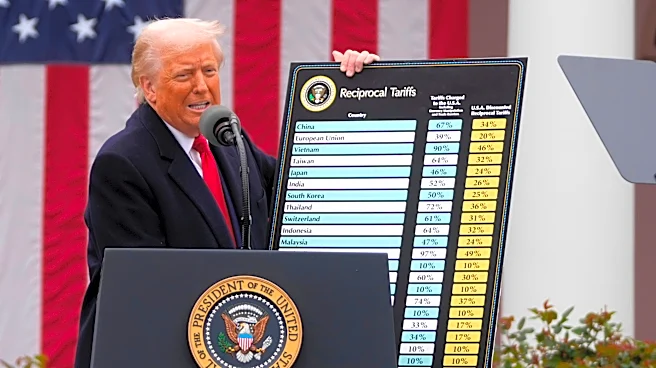
The report suggests that trade partnerships based on geographical proximity may continue to grow, driven by geo-economic factors and increasing trade costs. The US's recent imposition of new import tariffs on 60 countries, including Canada and the UK, could further alter trade dynamics. These tariffs, aimed at addressing labor exploitation, may lead to retaliatory measures and impact global supply chains. As countries adjust to these changes, there may be increased efforts to strengthen regional trade agreements and explore new markets. The evolving trade landscape will require businesses and policymakers to adapt strategies to navigate these shifts effectively.