


What's Happening?
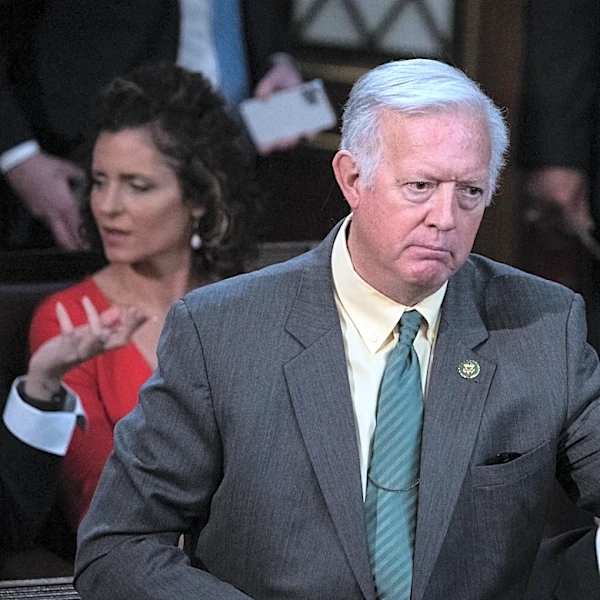
U.S. Senate Intelligence Committee Chairman Tom Cotton, a Republican, has strongly criticized Russia's demands regarding NATO, calling them 'absurd' and questioning the value of ongoing peace negotiations to end the war in Ukraine. Cotton's remarks came
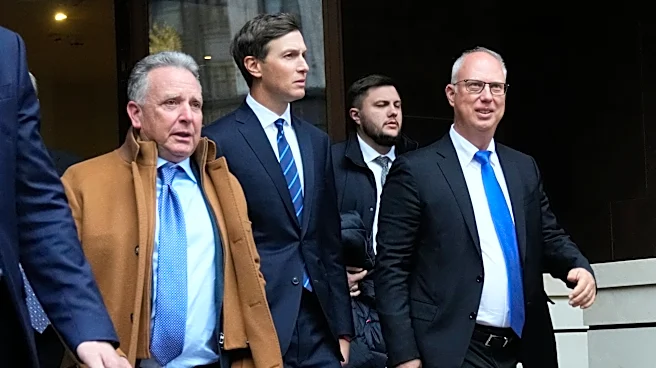
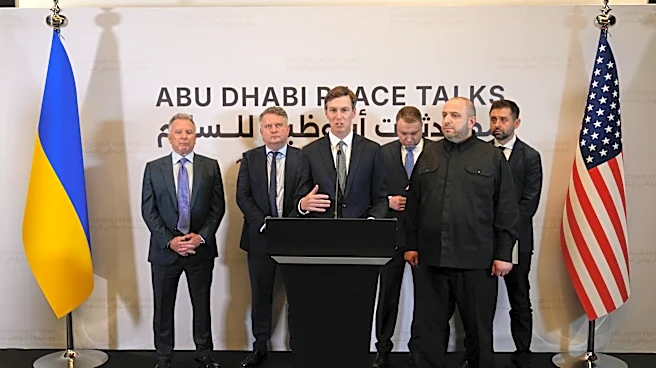
after reports that Russia, during closed-door talks in Abu Dhabi, presented U.S. mediators with a document outlining proposals for a future European security framework. These demands reportedly include rolling back NATO's military presence to its 1997 levels, ruling out further expansion of the Alliance, and restricting its military activities in Ukraine, Eastern Europe, the South Caucasus, and Central Asia. Cotton stated that Russian President Vladimir Putin is not interested in a negotiated peace and that the Kremlin will only agree to end the war when it realizes a military victory over Ukraine is impossible. He emphasized the need to help Ukraine prove that Russia cannot win.
Why It's Important?
Senator Cotton's strong condemnation reflects a significant segment of U.S. political opinion that views Russia's demands as unacceptable and its engagement in peace talks as disingenuous. His assertion that Putin is not serious about peace suggests a deep skepticism about the current diplomatic efforts and advocates for a more robust approach to supporting Ukraine. The Russian demands, if met, would fundamentally alter the security landscape of Europe, effectively dismantling NATO's post-1997 expansion and limiting its operational capabilities in key regions. This directly impacts U.S. strategic interests and its commitment to its NATO allies. Cotton's stance highlights the ongoing debate within the U.S. about the most effective strategy to counter Russian aggression and achieve a lasting peace in Ukraine, emphasizing military deterrence over diplomatic concessions.
What's Next?
Senator Cotton's remarks indicate that significant opposition exists within the U.S. government to any peace deal that incorporates Russia's demands regarding NATO's rollback. This will likely influence future U.S. policy and its approach to the ongoing peace talks. While negotiations continue, the U.S. is expected to maintain its support for Ukraine's sovereignty and territorial integrity, likely rejecting Russia's proposals to limit NATO's presence. The call to help Ukraine achieve military victory suggests a continued emphasis on providing military aid and strengthening Ukraine's defense capabilities. The diplomatic efforts will face the challenge of reconciling Russia's maximalist demands with the security interests of Ukraine and NATO members, making a breakthrough difficult without a significant shift in positions from either side.
Beyond the Headlines
Senator Cotton's comments underscore the ideological divide within international relations regarding how to deal with revisionist powers. His view that Putin is not interested in a negotiated peace, but rather in achieving military objectives, suggests a 'realpolitik' approach that prioritizes strength and deterrence. This perspective contrasts with those who advocate for continued diplomatic engagement, even if challenging. The Russian demands for NATO's rollback are not new; they echo proposals made before the 2022 invasion, indicating a consistent long-term strategic objective to diminish Western influence in Eastern Europe. The debate over these demands touches upon fundamental questions of national sovereignty, collective security, and the future of international alliances. The outcome of this geopolitical struggle will have profound implications for global stability and the balance of power.