
What's Happening?
President Donald Trump has indicated a potential shift in U.S.-Cuba relations, suggesting that the U.S. might 'take Cuba in some form.' This statement comes as Cuba faces a severe economic crisis, exacerbated by a U.S.-imposed oil blockade that has led
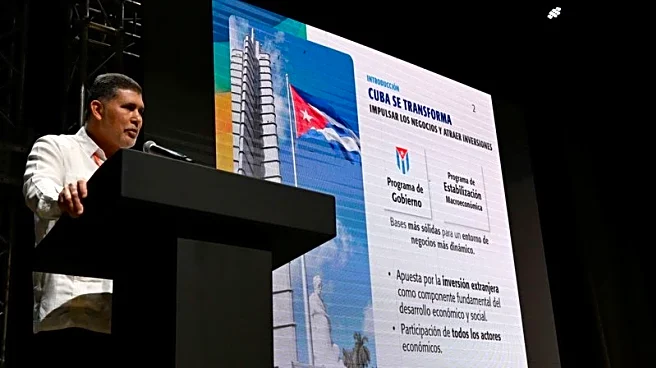
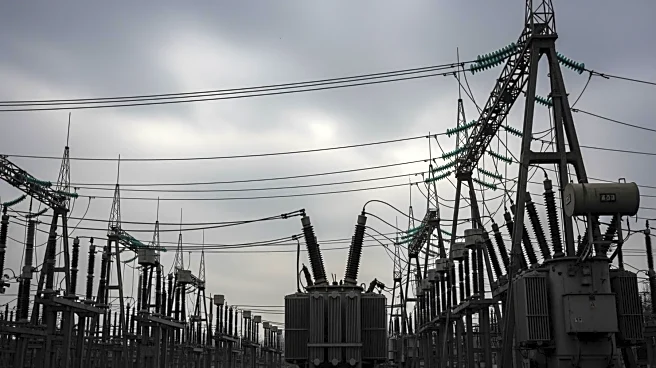
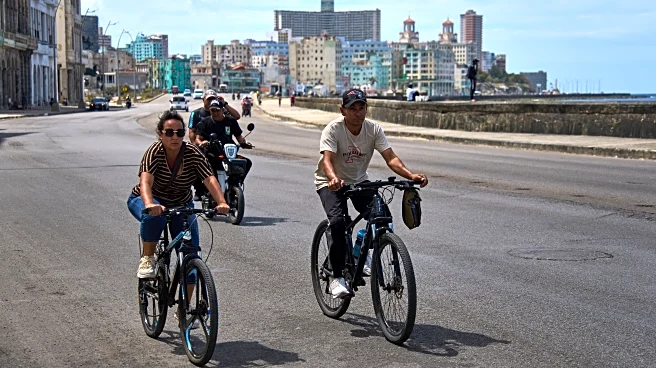
to the collapse of the national electric grid, affecting around 10 million people. The blockade has significantly impacted Cuba's already outdated power generation system. In a related development, Cuba has announced that Cubans living abroad, including those in Miami, will be permitted to invest in the private sector and own businesses in Cuba. This move is seen as an effort to bolster the island's struggling economy. The situation is unfolding as the U.S. and Cuba engage in talks that could lead to the reinstatement of relations or other significant actions.
Why It's Important?
The potential changes in U.S.-Cuba relations could have significant implications for both countries. For the U.S., re-establishing ties with Cuba could open new economic opportunities and influence in the Caribbean region. For Cuba, easing the blockade and allowing foreign investment could provide much-needed economic relief and modernization of its infrastructure. However, President Trump's comments about 'taking Cuba' could also lead to heightened tensions and resistance from Cuban authorities and citizens. The situation is further complicated by the geopolitical dynamics involving other countries, such as Venezuela, which has historically been an ally of Cuba. The outcome of these developments could affect regional stability and U.S. foreign policy in Latin America.
What's Next?
The next steps in U.S.-Cuba relations will likely depend on the outcome of ongoing negotiations and the Cuban government's response to President Trump's statements. If the U.S. and Cuba reach an agreement, it could lead to the lifting of the oil blockade and increased economic cooperation. However, if tensions escalate, it could result in further economic hardship for Cuba and potential diplomatic fallout. Stakeholders, including Cuban expatriates and international observers, will be closely monitoring the situation. The U.S. Congress may also play a role in shaping the future of U.S.-Cuba relations, depending on the administration's proposals and actions.