
What's Happening?
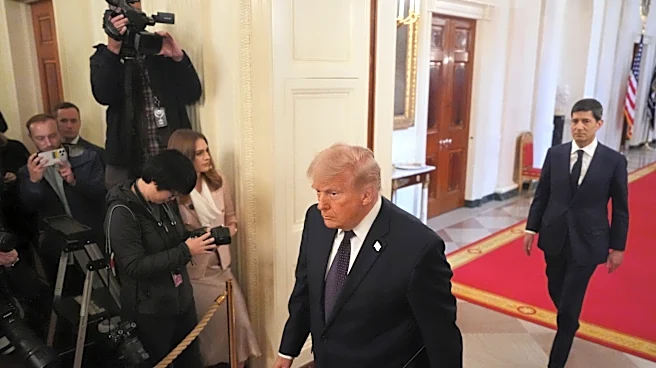
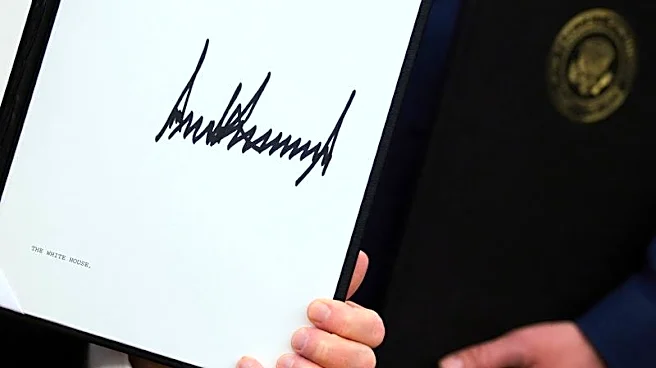
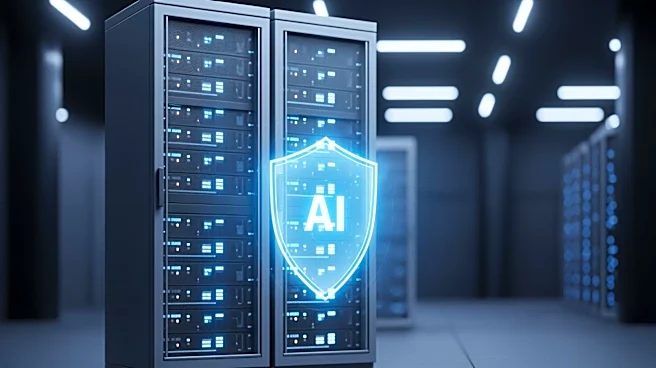
President Donald Trump has signed an executive order establishing a voluntary framework for federal vetting of advanced AI models before their public release. This directive allows government agencies
a 30-day period to assess potential national security and cybersecurity risks posed by these systems. The order is voluntary for AI developers, aiming to balance innovation with security without hindering U.S. technological competitiveness, especially against countries like China. Industry professionals have expressed mixed reactions, highlighting the order's voluntary nature and the potential gaps in its implementation. Some experts emphasize the importance of integrating AI risk into existing governance processes and the need for transparency in the order's execution.
Why It's Important?
The executive order is significant as it addresses the growing concerns over the security risks posed by advanced AI models. By establishing a framework for pre-release vetting, the order aims to enhance national and economic security, particularly in critical infrastructure sectors. However, the voluntary nature of the order raises questions about its effectiveness in ensuring widespread adoption and compliance. The initiative reflects a broader trend towards AI governance as a security concern, emphasizing the need for robust security architectures to mitigate risks. The order also signals potential shifts in investment and government contracts towards AI models that meet the established benchmarks.
What's Next?
The implementation of the executive order will likely involve collaboration between the government and private sector to develop effective benchmarking processes. The order's success will depend on its ability to foster international norms and hold adversaries accountable. Enterprises are encouraged to reinforce cybersecurity fundamentals and integrate AI risk management into their operations. The order may also prompt discussions on the need for a public-private consortium to oversee AI models, similar to the Institute of Nuclear Power Operations in the nuclear industry. The coming months will reveal how the order influences AI innovation and security practices.