






What's Happening?
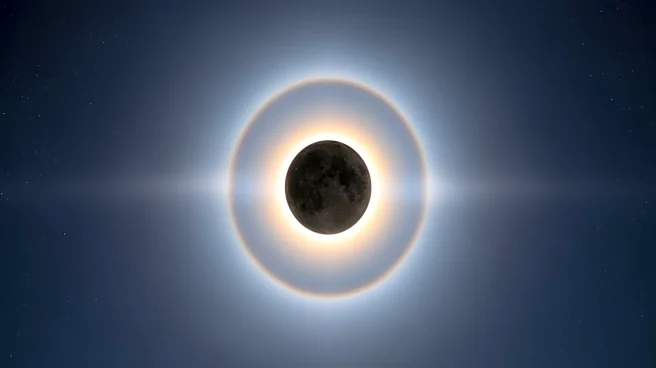
A total solar eclipse is set to occur on August 12, 2026, visible across Greenland, Iceland, northern Russia, and parts of the Atlantic Ocean, Spain, and Portugal. Many regions in the Northern Hemisphere, including parts of the northern U.S., Canada,
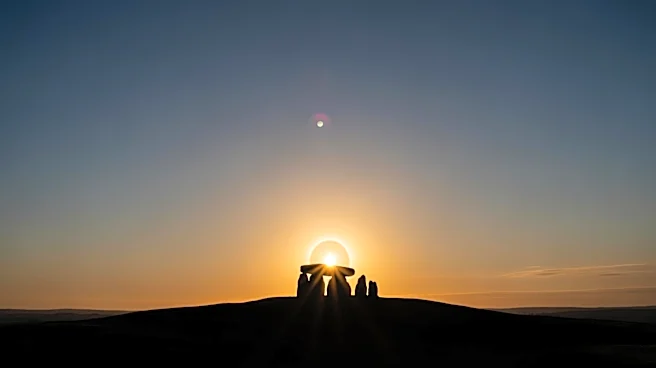
Europe, and northwestern Africa, will experience a partial eclipse. The eclipse will offer a unique opportunity for observers to witness a sunset eclipse in some areas. The path of totality will allow viewers to see the Sun completely covered by the Moon for a brief period, while those outside this path will see a partial eclipse.
Why It's Important?
This celestial event is significant for both scientific observation and public interest. It provides a rare opportunity for scientists to study the Sun's corona and other solar phenomena. For the public, it offers a chance to engage with astronomy and witness a natural spectacle. The eclipse could boost tourism in regions along the path of totality, as enthusiasts travel to optimal viewing locations. It also underscores the importance of public education on safe viewing practices to prevent eye damage during the eclipse.
What's Next?
As the eclipse approaches, educational campaigns will likely increase to inform the public about safe viewing methods, such as using eclipse glasses or indirect viewing techniques. Local governments and tourism boards in areas along the path of totality may prepare for an influx of visitors, organizing events and providing resources for eclipse watchers. Scientists will also prepare for the event, setting up equipment and coordinating research efforts to maximize the scientific yield from this rare opportunity.