
What's Happening?
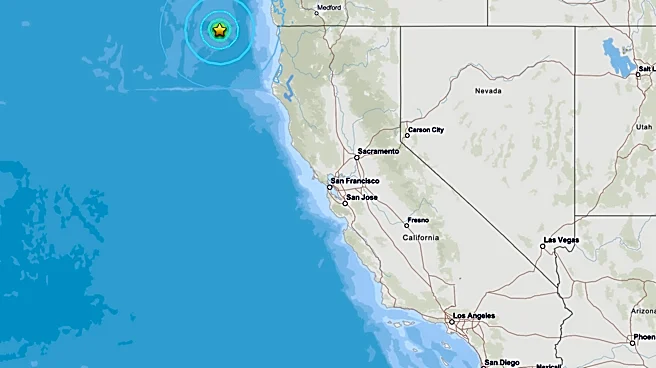
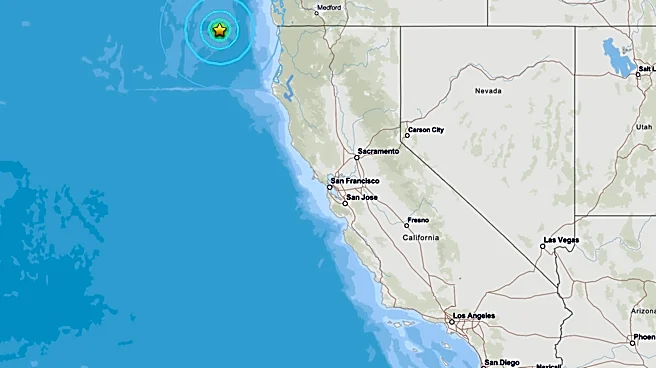
A 5.1-magnitude earthquake struck in the North Pacific Ocean, approximately 40 miles west of Petrolia, California, as reported by the United States Geological Survey (USGS). The earthquake occurred at 5:45
a.m. Pacific time. Following the initial quake, aftershocks have been detected in the same area, which are typical as minor adjustments occur along the fault line that slipped during the initial event. These aftershocks can continue for days, weeks, or even years and may be of equal or larger magnitude than the initial quake. The USGS is reviewing data and may revise the earthquake's reported magnitude and update the shake-severity map based on additional information.
Why It's Important?
The occurrence of aftershocks following a significant earthquake can have substantial implications for the affected regions. These aftershocks can exacerbate damage to infrastructure and pose ongoing risks to communities already impacted by the initial quake. The potential for further seismic activity necessitates preparedness and response measures from local authorities and emergency services. Additionally, the data collected from these events contribute to the understanding of seismic activity patterns, which is crucial for future risk assessments and mitigation strategies in earthquake-prone areas like California.
What's Next?
Seismologists will continue to monitor the area for further aftershocks and assess the potential for additional seismic activity. The USGS may update its reports and maps as new data becomes available. Local authorities and emergency services will likely remain on alert to respond to any further developments. Residents in the affected areas are advised to stay informed through official channels and be prepared for possible aftershocks.