



What's Happening?
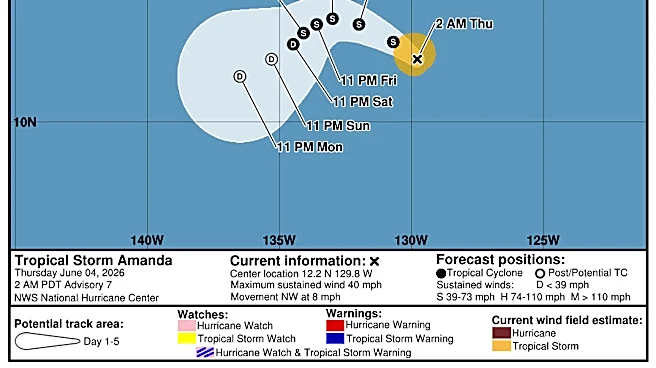
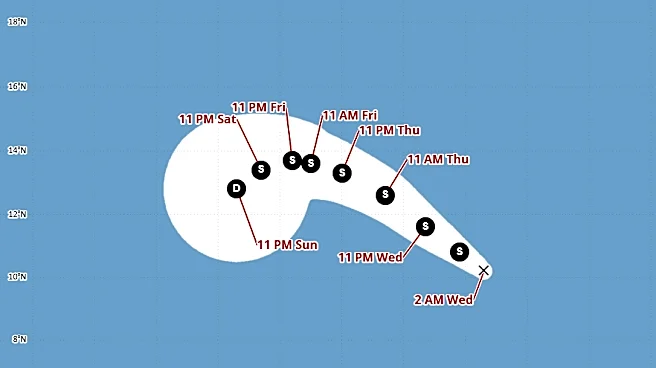
Tropical Storm Amanda has been identified as the first named storm of the 2026 eastern Pacific hurricane season. The storm is currently tracking across the open ocean, with forecasters closely monitoring its path. As of the latest updates, Amanda is not
expected to become a hurricane or make landfall, but it marks the beginning of what could be an active period in the eastern Pacific. The storm is located approximately 1,500 miles west-southwest of the southern tip of Baja California, with maximum sustained winds of 40 mph. It is moving west-northwest at around 8 mph. The National Hurricane Center (NHC) has indicated that Amanda may gain some strength before weakening over the weekend. Additionally, two other disturbances in the region are being monitored for potential development into tropical systems.
Why It's Important?
The emergence of Tropical Storm Amanda signals the start of the Pacific hurricane season, which can have significant implications for weather patterns and safety in the region. While Amanda itself is not expected to impact land, the presence of multiple potential storms highlights the need for vigilance and preparedness among coastal communities. The tracking of these storms is crucial for issuing timely warnings and mitigating potential damage. The development of multiple systems simultaneously could strain resources and require coordinated efforts from meteorological agencies to ensure public safety.
What's Next?
Forecasters will continue to monitor Amanda's trajectory and strength, with current projections suggesting it will weaken and dissipate over open water. The NHC is also keeping an eye on two other disturbances that could develop into tropical systems, potentially leading to three active storms in the eastern Pacific. This situation requires ongoing observation and readiness to issue advisories if any of the systems pose a threat to land. The Pacific hurricane season typically begins earlier than the Atlantic season, and while many Pacific storms remain over open water, they can still influence weather conditions and oceanic activity.