







What's Happening?
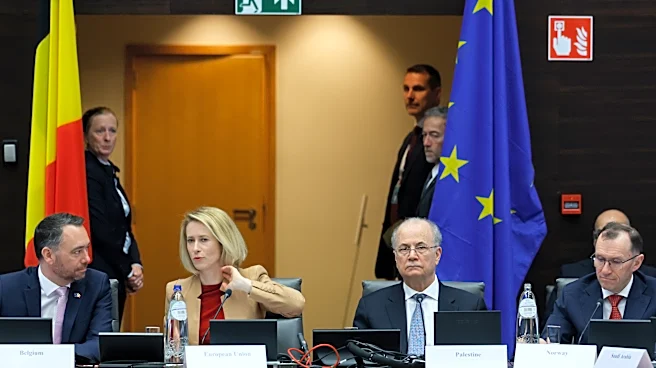
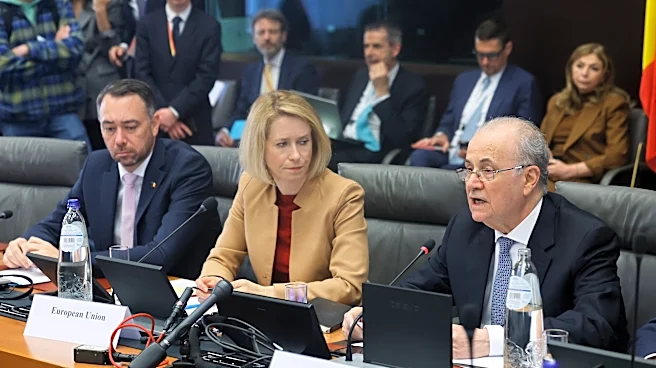
Nickolay Mladenov, the lead envoy for the Board of Peace, expressed cautious optimism about reaching an agreement on the disarmament of Hamas and other militant groups in Gaza. During discussions in Brussels, Mladenov highlighted the challenges faced
in negotiations, emphasizing the complexity of talks with Hamas. The plan, proposed by President Trump, involves Israeli military withdrawal and reconstruction efforts in Gaza, contingent on Hamas laying down its arms. Despite the October ceasefire, violence persists in the region, complicating the implementation of the plan. Mladenov noted the importance of addressing issues such as the 'yellow line' demarcation and access for aid and medicine, which are under negotiation with Israel.
Why It's Important?
The disarmament plan is crucial for stabilizing Gaza and ensuring long-term peace in the region. Successful implementation could lead to significant geopolitical shifts, reducing tensions between Israel and Gaza. The involvement of the Board of Peace, chaired by President Trump, underscores the U.S.'s commitment to resolving the conflict. However, the ongoing violence and complex negotiations pose risks to the plan's success. The outcome of these talks could impact U.S. foreign policy and its relations with Middle Eastern countries, as well as influence international perceptions of U.S. diplomatic efforts.
What's Next?
Mladenov indicated that an agreement on the implementation plan is needed within days or weeks to maintain momentum. The focus will be on finalizing arrangements for disarmament, governance changes in Gaza, and Israeli withdrawal. The international community, including U.S. allies, is expected to continue supporting relief efforts, with financial contributions playing a key role. The success of these negotiations could lead to further diplomatic engagements and potential shifts in regional alliances.