





What's Happening?
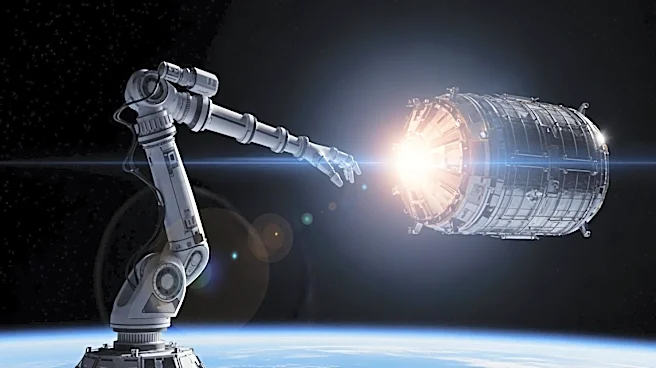
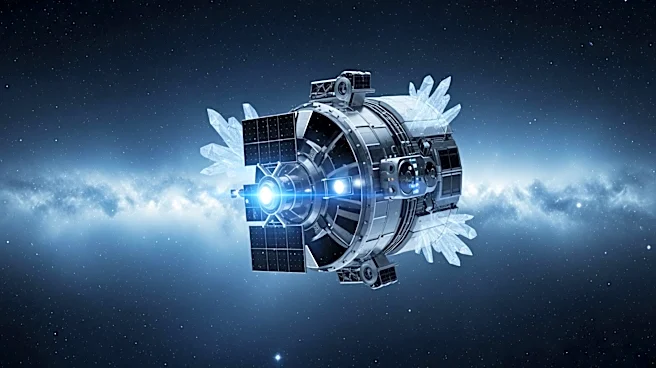
Engineers from Katalyst Space Technologies have begun testing their LINK robotic servicing spacecraft at NASA's Goddard Space Flight Center in Maryland. This initiative is part of a contract awarded by NASA to boost the orbit of the Neil Gehrels Swift
Observatory, which is experiencing orbital decay due to atmospheric drag. The LINK spacecraft will attempt to raise Swift's orbit, allowing it to continue its scientific observations. The testing includes vibration and thermal assessments, with plans to launch the spacecraft later this year. This mission aims to extend the observatory's lifespan and enhance its cosmic exploration capabilities.
Why It's Important?
The collaboration between NASA and Katalyst Space Technologies represents a significant advancement in space mission servicing capabilities. By extending the operational life of the Swift Observatory, NASA can continue to gather valuable scientific data without the immediate need for a replacement satellite. This approach not only maximizes the return on investment for taxpayers but also sets a precedent for future satellite servicing missions. The ability to boost and maintain satellite orbits could lead to more sustainable and cost-effective space exploration strategies, benefiting scientific research and technological development.
What's Next?
Following the completion of environmental tests, the LINK spacecraft will be integrated into Northrop Grumman's Pegasus rocket for launch. Once in orbit, it will attempt to rendezvous with the Swift Observatory to execute the boost operation. Success in this mission could pave the way for similar servicing missions, potentially revolutionizing how aging satellites are maintained and extending their operational lifespans. Stakeholders in the aerospace industry may closely monitor this mission as a model for future collaborations between government agencies and private companies.