
What's Happening?
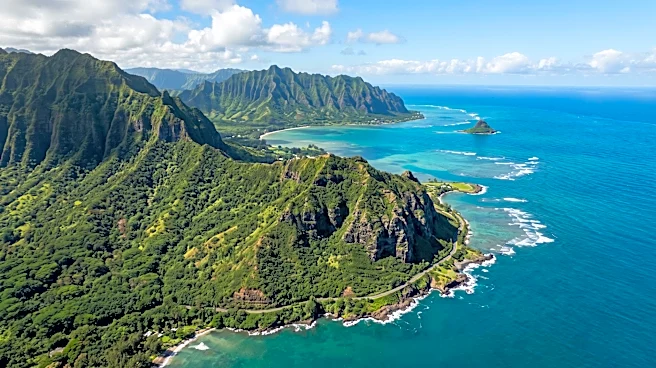
The Federal Aviation Administration (FAA) has issued a Temporary Flight Restriction (TFR) over Kaneohe, Hawaii, effective November 9, 2026, from 1:00 PM to 7:00 PM HST. This restriction, identified as NOTAM
6/6282, classifies the affected airspace as 'National Defense Airspace' under 49 USC 40103(B)(3). All aircraft flight operations, including drones, are prohibited within a specified area up to 17,999 feet Mean Sea Level (MSL), unless explicitly authorized by Air Traffic Control (ATC) or meeting specific exceptions. Pilots who fail to comply with these procedures may face interception, detention, and questioning by law enforcement or security personnel, and knowing violations could lead to criminal penalties. The FAA cites 'security' under 14 CFR 99.7 special security instructions as the reason for the TFR, with its short name being "261109-10 Skyrange PHNG." Aircraft permitted to enter or exit the TFR must be on an active IFR or VFR flight plan with a discrete code assigned by ATC, squawk the code at all times, and maintain two-way radio communication with ATC. Honolulu ARTCC is designated as the FAA coordination facility for this TFR.
Why It's Important?
This temporary flight restriction in Kaneohe, Hawaii, is significant due to its direct impact on aviation operations and its implications for national security. By designating the airspace as 'National Defense Airspace,' the FAA underscores the critical nature of the security concerns prompting the TFR. This measure ensures the safety and security of specific operations or locations within the restricted zone, preventing unauthorized aerial access that could pose a threat. For general aviation pilots, commercial operators, and drone enthusiasts, the TFR necessitates immediate compliance, potentially disrupting planned flights and requiring rerouting or cancellation. The strict enforcement measures, including potential interception and criminal penalties, highlight the seriousness with which the FAA and law enforcement treat violations in such sensitive airspace. Economically, while temporary, such restrictions can cause minor disruptions to local air travel and related businesses. More broadly, it serves as a reminder of the constant vigilance required to maintain national security, even in seemingly routine airspace management.
What's Next?
The Temporary Flight Restriction (TFR) over Kaneohe, Hawaii, is scheduled to be in effect for a limited duration, from 1:00 PM to 7:00 PM HST on November 9, 2026. Once this period concludes, the airspace will revert to its normal operational status, assuming no extensions or new restrictions are issued. Pilots and drone operators in the region will need to monitor official FAA NOTAMs for any updates or changes to the current TFR. For those whose flights are affected, the immediate next steps involve adjusting flight plans, seeking alternative routes, or rescheduling operations to avoid the restricted area during the specified times. The FAA's coordination facility, Honolulu ARTCC, will remain the primary point of contact for any inquiries or authorization requests related to the TFR. After the TFR expires, the FAA will likely conduct a review of the security event that prompted the restriction, though details of such reviews are typically not made public.
Beyond the Headlines
The imposition of a Temporary Flight Restriction (TFR) for security reasons, particularly in an area like Kaneohe, Hawaii, which hosts significant military installations, often hints at underlying security concerns that are not publicly disclosed. While the FAA cites general 'security' reasons, these can range from VIP movements to specific national defense exercises or potential threat assessments. Such TFRs underscore the continuous, often unseen, efforts by national security agencies to protect critical assets and personnel. The classification of airspace as 'National Defense Airspace' invokes a higher level of legal authority and consequence for non-compliance, reflecting the gravity of the perceived threat or operational sensitivity. This event also highlights the delicate balance between maintaining public access to airspace and ensuring national security, a balance that is constantly re-evaluated based on evolving geopolitical landscapes and domestic security needs. The routine nature of such TFRs, despite their disruptive potential, signifies a robust and proactive approach to airspace management in the interest of national defense.