





What's Happening?
North American airlines experienced an improvement in on-time performance (OTP) for the second consecutive month in October. According to a report by Cirium, an aviation analytics company, the average OTP for North American carriers rose by 2.2 percentage
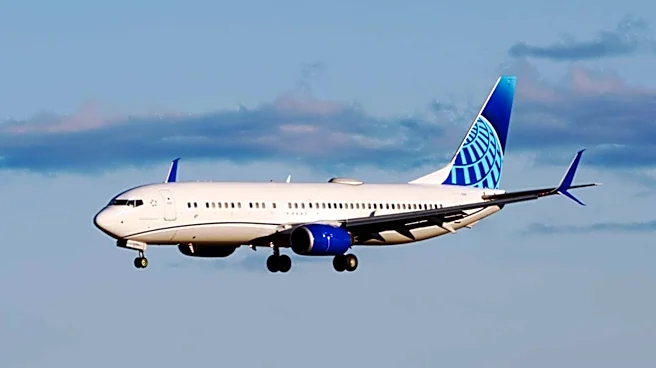
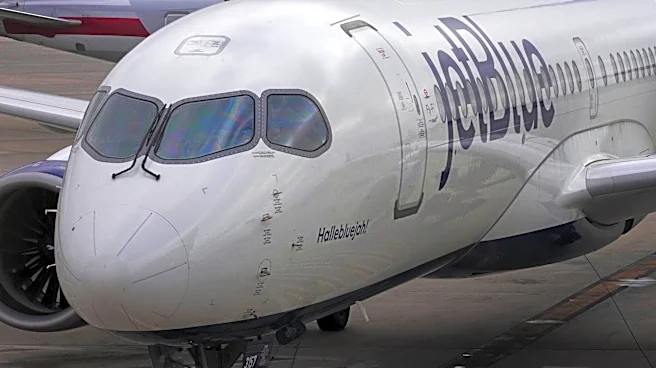
points from September, reaching 79.8%. Out of the ten airlines included in the report, seven showed month-over-month improvements. Delta Air Lines recorded the best average OTP in October at 86.9%, marking a 4.4 percentage point increase from the previous month. United Airlines followed with an OTP of 84.1%, a 5.4 percentage point improvement. JetBlue saw the most significant month-over-month gain, increasing by 7.7 percentage points to 82.3%, moving it from seventh to fourth place. Conversely, Southwest Airlines and WestJet experienced declines in their OTP. Southwest Airlines' OTP fell by 2.2 percentage points to 68.9%, placing it last for the second consecutive month, while WestJet's OTP decreased by 1.7 percentage points to 83.6%, though it still held the third position.
Why It's Important?
Improved on-time performance among North American airlines is crucial for passenger satisfaction and operational efficiency within the U.S. aviation industry. Higher OTP reduces passenger frustration from delays, enhances airline reputations, and can lead to increased customer loyalty. For business travelers, consistent on-time arrivals are vital for meeting schedules and commitments, directly impacting productivity. Airlines that consistently perform well, like Delta and United, can gain a competitive edge, potentially attracting more passengers and revenue. Conversely, carriers like Southwest Airlines, which have seen declining OTP, may face increased scrutiny, customer dissatisfaction, and potential financial repercussions due to compensation for delays and rebooking costs. The overall improvement suggests a positive trend in airline operations, which could reflect better scheduling, improved ground operations, or more effective management of unforeseen disruptions, benefiting the broader travel and tourism sectors.
What's Next?
Airlines will likely continue to focus on operational improvements to maintain or further enhance their on-time performance, especially as the busy holiday travel season approaches. Carriers with strong OTP, such as Delta and United, will aim to sustain their leading positions, potentially leveraging their reliability in marketing efforts. Airlines with declining OTP, like Southwest, will need to analyze the root causes of their delays and implement corrective measures to avoid further customer dissatisfaction and potential financial penalties. This could involve adjustments to flight schedules, investments in ground infrastructure, or enhancements in crew management. The aviation analytics firm Cirium will continue to monitor these metrics, providing ongoing insights into airline performance, which will be closely watched by both industry stakeholders and the traveling public. Future reports will indicate whether these improvements are sustainable or if new challenges emerge.
Beyond the Headlines
The consistent tracking of on-time performance by entities like Cirium highlights a broader industry trend towards data-driven operational management and accountability. Beyond mere punctuality, OTP is a key indicator of an airline's overall operational health, reflecting its ability to manage complex logistics, maintenance schedules, and staffing effectively. For consumers, these metrics empower more informed travel decisions, fostering a competitive environment where airlines are incentivized to prioritize efficiency. The varying performance among airlines also underscores the diverse operational models and challenges each faces, from legacy carriers with extensive networks to low-cost carriers operating on tighter margins. This data transparency can also influence regulatory discussions around passenger rights and compensation for delays, potentially leading to policy adjustments aimed at further protecting travelers and ensuring industry standards are met.