




What's Happening?
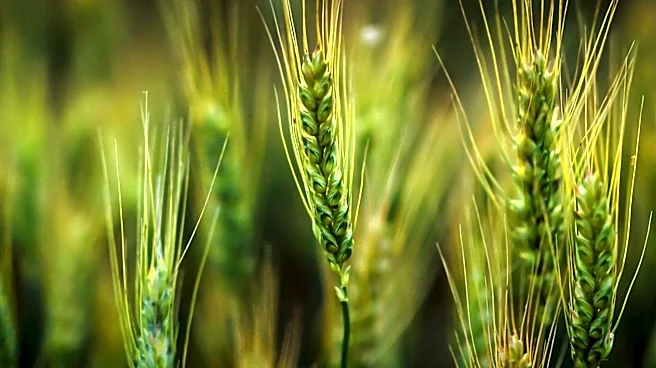
Researchers at Tel Aviv University have discovered a genetic mechanism in wild wheat that could significantly improve crop yields and nutritional value. The study, partially led by Dr. Zechariah Haber before his death in Gaza in 2024, identified a gene that,
when its activity is reduced, results in larger and heavier wheat grains with higher protein, iron, and zinc levels. This research, completed in Dr. Nir Sade's laboratory, utilized CRISPR gene-editing technology to confirm the gene's role in seed development and nutrient distribution. The findings suggest that this gene could help develop wheat varieties better suited to changing climates, as different versions of the gene are adapted to various environmental conditions.
Why It's Important?
This discovery holds significant implications for global food security and agricultural sustainability. By leveraging the genetic diversity of wild wheat, researchers can develop new wheat varieties that not only yield more but also offer enhanced nutritional benefits. This is particularly crucial as climate change poses challenges to traditional agriculture, with increasing temperatures and changing precipitation patterns threatening crop productivity. The ability to produce wheat that thrives in diverse climates and maintains nutritional quality could help meet the rising global food demand and address malnutrition issues.
What's Next?
Future research will likely focus on integrating this genetic discovery into commercial wheat breeding programs. Researchers may also explore the potential of other genes in wild wheat that could further enhance crop resilience and nutritional value. As climate change continues to impact agriculture, the development of crops that can withstand extreme weather conditions will be essential. Collaboration between geneticists, agronomists, and policymakers will be crucial to ensure these advancements are effectively implemented in agricultural practices.
Beyond the Headlines
The ethical implications of using gene-editing technologies like CRISPR in agriculture are significant. While these technologies offer promising solutions to food security challenges, they also raise concerns about biodiversity, ecological balance, and the potential for unintended consequences. Ensuring that these technologies are used responsibly and equitably will be a key consideration for researchers and policymakers.