
What's Happening?
The winter solstice, marking the shortest day of the year in the Northern Hemisphere, occurs on December 21, 2025, at 10:03 A.M. EST. This astronomical event signifies the beginning of winter in the Northern Hemisphere and
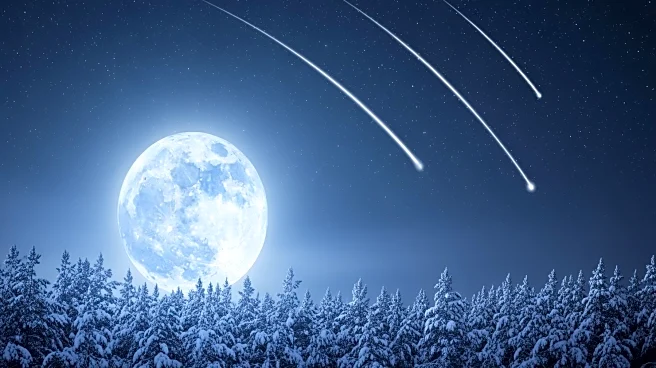
summer in the Southern Hemisphere. Concurrently, the Ursid meteor shower is expected to peak, offering a display of approximately 10 meteors per hour under optimal dark conditions. The article also highlights other celestial phenomena, such as the transit of Jupiter's moon Io and the visibility of Comet 24P/Schaumasse as it navigates the Virgo Cluster. These events provide opportunities for sky watchers to observe various deep-sky objects and planetary phenomena.
Why It's Important?
The winter solstice is a significant astronomical event that affects cultural and seasonal activities across the globe. In the U.S., it marks the transition into winter, influencing agriculture, energy consumption, and lifestyle patterns. The Ursid meteor shower, though less prominent than other meteor showers, offers a unique opportunity for amateur astronomers and the general public to engage with astronomy. Such celestial events can inspire interest in science and provide educational opportunities. Additionally, the visibility of Comet 24P/Schaumasse and other planetary phenomena enriches the observational experience for astronomy enthusiasts.
What's Next?
Following the winter solstice, daylight hours will gradually increase in the Northern Hemisphere, impacting various sectors such as agriculture and energy. The Ursid meteor shower will continue to be visible for a short period, encouraging night-time observations. As the year progresses, other astronomical events will follow, offering further opportunities for public engagement and scientific observation. The ongoing visibility of Comet 24P/Schaumasse will continue to attract interest from the astronomy community.