





What's Happening?
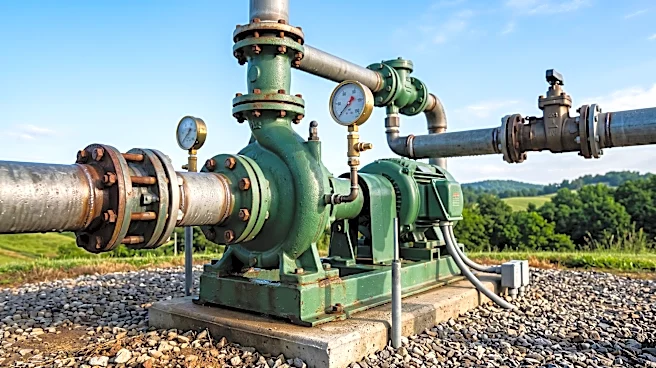
The City of Rio Rancho is facing ongoing challenges with its water infrastructure, having repaired 64 water main breaks in the last fiscal year and 66 the year prior. The city's Utilities Director, Steve Gallegos, attributes these frequent breaks to factors
such as pipe condition, construction activities, and fluctuations in water demand and pressure. The city's water system spans 639 miles of water lines and 435 miles of sewer, serving 41,481 customers. While the city owns the system, contractor Jacobs manages its operations with approximately 71 workers under a contract set to expire in June 2031. In September 2024, the city amended this contract to accelerate repairs, adding staff and equipment, and reducing the target repair time for service-line leaks from seven to three days. Since July 2013, 7,295 service lines have been replaced.
Why It's Important?
The persistent water main breaks in Rio Rancho highlight a critical infrastructure issue that directly impacts the daily lives of its 41,481 utility customers. Frequent disruptions can lead to water service interruptions, potential property damage, and increased costs for emergency repairs. The city's proactive measures, such as amending the contract with Jacobs to speed up repairs and planning water line replacements in conjunction with road rebuilds, demonstrate an effort to mitigate these issues and manage costs. However, the significant unfunded portion of the city's capital plan for water and wastewater projects—$123.2 million out of a total of $270.7 million—poses a substantial financial challenge. This funding gap could delay essential upgrades and repairs, potentially leading to more frequent and severe infrastructure failures in the future, impacting public health and economic stability.
What's Next?
Rio Rancho's five-year capital plan includes $139 million for water projects and $131.7 million for wastewater projects. While utility revenue, impact fees, water rights fees, and bonds cover $233.1 million, the remaining $123.2 million is currently unfunded. The city is actively seeking state and federal grants to bridge this financial gap. Upcoming projects include $5.3 million to rehabilitate five wells this fiscal year and $13.8 million to bring the redrilled Well 9 online by winter of fiscal 2029. Utilities staff also plan to discuss serving customers outside city limits with the Governing Body. The annual 3% increase in water and wastewater rates through fiscal 2030, approved in March 2025, is intended to help fund these ongoing infrastructure needs.
Beyond the Headlines
The situation in Rio Rancho reflects a broader national challenge faced by many aging U.S. cities regarding their water infrastructure. The reliance on annual rate increases and the pursuit of state and federal grants underscore the financial strain on local governments to maintain essential services. The long-term implications of underfunded infrastructure can include not only service disruptions but also potential health risks from aging pipes and environmental concerns from leaks. The city's strategy of coordinating water line replacements with road rebuilds is an efficient approach to minimize disruption and cost, but the sheer scale of unfunded projects suggests a need for more comprehensive and sustainable funding solutions, potentially involving federal investment or innovative financing models, to prevent future crises and ensure reliable utility services for residents.