






What's Happening?
A new form of phishing scam, known as calendar phishing, is experiencing exponential growth, according to Luke Wescott, a threat detection engineer at Sublime Security. This scam involves fraudsters sending calendar invitations that automatically appear
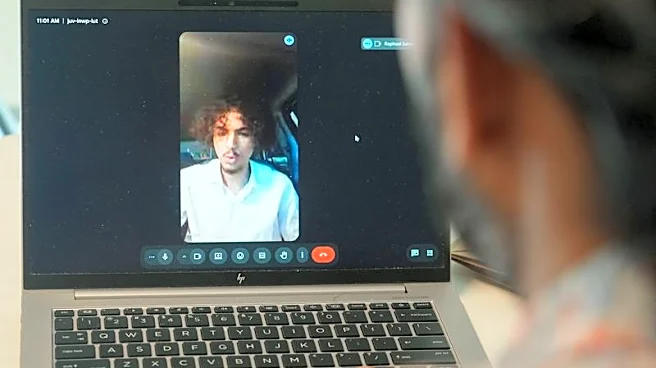
in a victim's electronic calendar, even if the email is not opened or goes to spam. These fake entries often masquerade as meeting requests, voicemail notifications, or service renewal reminders. When a user clicks on the calendar entry, they are typically directed to a fraudulent website that prompts them to enter login details for services like Google, Microsoft, or PayPal, or to call a fake support number to cancel a non-existent charge. The deceptive nature of these calendar entries, appearing alongside legitimate appointments, lends them a 'borrowed credibility,' making them harder for users to identify as malicious. Max Gannon, an intelligence analysis manager at Cofense, notes that some scammers are using legitimate platforms like Zoom to send these invitations, further complicating detection by security software and making them appear more convincing.
Why It's Important?
The rise of calendar phishing poses a significant threat to personal and corporate cybersecurity. Unlike traditional email phishing, which relies on users opening and interacting with an email, calendar phishing bypasses this initial barrier by automatically populating a user's calendar. This method exploits the inherent trust users place in their calendar applications, making them more susceptible to clicking on malicious links or calling fraudulent numbers. The use of legitimate platforms for sending these invitations makes them particularly difficult for AI-backed blockers and other security measures to detect, increasing the risk of successful attacks. If compromised, personal login credentials can be sold on the dark web, used for identity theft, or to gain unauthorized access to work email accounts, leading to potential data breaches and financial losses for individuals and organizations. The ability of scammers to customize these invitations, potentially including company logos, further blurs the line between legitimate and fraudulent communications, making vigilance crucial for all users.
What's Next?
Users are advised to exercise extreme caution with unexpected calendar entries. Experts recommend treating any suspicious calendar invitation with the same skepticism as an unsolicited email, refraining from clicking on links or calling numbers provided within them. Luke Wescott suggests configuring calendar settings, such as in Google Calendar, to only accept invitations from known senders or after manual acceptance, rather than automatically. It is also crucial to avoid declining suspicious invites, as this action can inadvertently confirm to scammers that an email address is active. Instead, users should delete or report such entries as spam or junk. Cybersecurity firms and email providers will likely continue to develop more sophisticated detection mechanisms to combat this evolving threat, but user awareness and proactive security measures remain the first line of defense against calendar phishing. The ongoing challenge will be to balance security with the convenience of automatic calendar functionalities.
Beyond the Headlines
The proliferation of calendar phishing highlights a broader trend in cybercrime: the continuous adaptation of social engineering tactics to exploit human behavior and trust in digital platforms. This method leverages the psychological impact of an item appearing in a trusted personal organizer, creating a sense of urgency or legitimacy that might not be present in a standard email. The difficulty in blocking these scams, especially when legitimate platforms are used, points to a systemic vulnerability in how digital communication and scheduling tools are integrated. This could lead to a re-evaluation of default settings in calendar applications, potentially shifting towards more restrictive invitation policies. Furthermore, the success of these scams underscores the need for ongoing public education on digital literacy and cybersecurity best practices, moving beyond traditional email-based phishing awareness to encompass all forms of digital communication. The 'borrowed credibility' of calendar entries may also prompt a re-thinking of how digital platforms can better verify the authenticity of event invitations without hindering legitimate use.