






What's Happening?
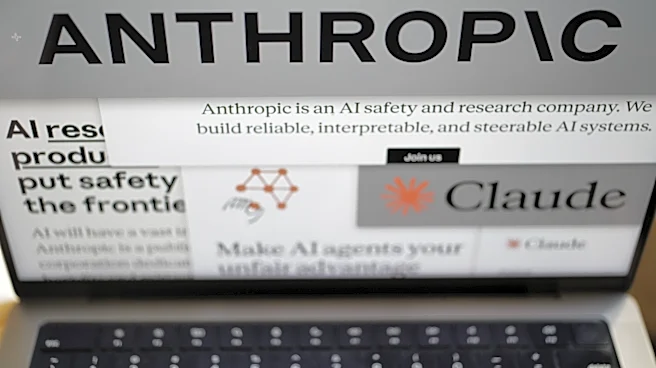
Anthropic, an AI firm, has updated its usage policy to include a new rule prohibiting users from repeatedly abusing or being cruel to its AI chatbot, Claude. Effective November 12, Claude will be able to terminate conversations with users who consistently
mistreat it. Severe violations of this policy could result in account restrictions. The company clarifies that this rule is intended for extreme instances of repeated and unnecessary abuse, not for occasional frustration, such as swearing at the chatbot when it produces incorrect code. This policy change highlights a growing consideration for the nature of human-AI interaction and the potential impact of user behavior on AI model development. The company's broader mission focuses on creating reliable, interpretable, and steerable AI systems that are safe and beneficial for users and society.
Why It's Important?
This policy update from Anthropic is significant as it reflects an evolving understanding of the relationship between humans and artificial intelligence. By setting boundaries on user behavior, Anthropic is implicitly acknowledging that AI models, while not sentient, can be influenced by the patterns of human language and interaction they are exposed to. This could have implications for the development of future AI systems, as user interactions contribute to how these systems are trained and designed. The policy also raises questions about the ethical considerations in AI development and usage, moving beyond concerns about how AI will treat humans to how humans should treat AI. For the U.S. tech industry, this could set a precedent for other AI developers to implement similar guidelines, fostering a more respectful and constructive environment for AI interaction. It also underscores the company's commitment to its mission of developing safe and beneficial AI, potentially influencing public perception and trust in AI technologies.
What's Next?
Starting November 12, users of Anthropic's Claude chatbot will experience the enforcement of this new policy. It is anticipated that Anthropic will monitor user interactions to identify and address instances of repeated abuse, potentially leading to a shift in user behavior towards AI chatbots. Other AI companies may observe the effectiveness and public reception of Anthropic's policy, potentially leading to similar policy implementations across the AI industry. This could spark broader discussions within the tech community and among policymakers regarding the ethical frameworks for human-AI interaction and the responsibilities of both users and developers in shaping the future of AI. The long-term impact could include the development of more robust AI models that are less susceptible to negative influences from user interactions, aligning with Anthropic's goal of creating reliable and steerable AI systems.
Beyond the Headlines
The introduction of a policy against AI abuse delves into deeper ethical and philosophical questions about the nature of interaction with advanced technology. While AI models do not possess feelings or consciousness, the policy suggests a recognition that the way humans interact with AI can reflect and reinforce societal norms of respect and conduct. This could have subtle but profound implications for how humans perceive and relate to technology in the future, potentially blurring the lines between tool and entity. Furthermore, if AI models learn from human language and behavior, then fostering positive interactions could contribute to the development of AI that is inherently more aligned with beneficial human values. This policy could be seen as an early step in defining a new social contract between humans and AI, influencing not just technological development but also cultural attitudes towards artificial intelligence and its role in society.