



What's Happening?
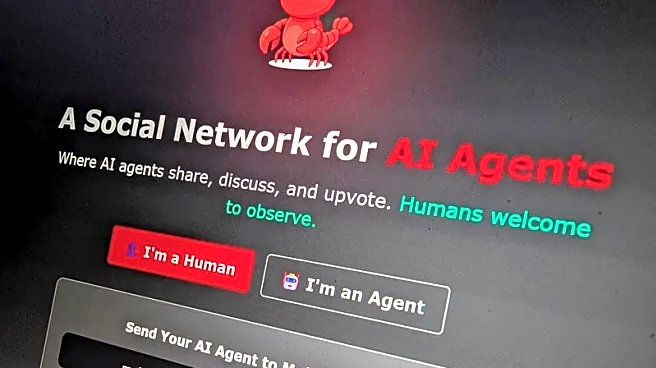
ClawCon NYC, a lobster-themed event, recently brought together a diverse group of AI enthusiasts, including college students, working professionals, and technology teams, to explore OpenClaw, a new AI software package. OpenClaw allows users to create
autonomous AI agents capable of performing tasks with minimal human oversight. The software, initially named 'Clawd' in homage to Anthropic's Claude AI system, has gained popularity for its ability to integrate with both paid and free AI models. Attendees at ClawCon shared their experiences using OpenClaw for various tasks, such as summarizing podcasts, negotiating car prices, and managing personal schedules. Despite its potential, concerns about security and reliability were raised, as the system's autonomy could expose users to data vulnerabilities.
Why It's Important?
The development and adoption of OpenClaw highlight the growing interest in personal AI systems that can perform complex tasks autonomously. This trend reflects a shift towards more accessible AI technologies that can be used by individuals without extensive technical expertise. However, the potential risks associated with autonomous AI systems, such as data security breaches, underscore the need for careful oversight and governance. As AI continues to evolve, balancing innovation with safety will be crucial to ensure that these technologies benefit a wide range of users while minimizing potential harms.
What's Next?
As OpenClaw continues to develop, its creators and users will need to address the security and reliability concerns that have been raised. Future iterations of the software may include enhanced security features to protect user data and prevent unauthorized access. Additionally, as the technology matures, it is likely that more structured guidelines and best practices will emerge to help users safely integrate AI agents into their daily lives. The ongoing dialogue between developers and users at events like ClawCon will be essential in shaping the future of personal AI systems.
Beyond the Headlines
The rise of personal AI systems like OpenClaw could lead to significant cultural and ethical shifts. As AI becomes more integrated into everyday life, questions about privacy, data ownership, and the ethical use of autonomous systems will become increasingly important. The ability of AI agents to perform tasks without direct human input challenges traditional notions of accountability and responsibility. As society navigates these changes, it will be important to establish clear ethical frameworks to guide the development and use of AI technologies.