







What's Happening?
Ukraine has accused Russia of committing 'nuclear terrorism' following a drone strike on a spent nuclear storage facility near the Chernobyl nuclear power plant. The incident occurred at the Centralized Spent Nuclear Fuel Storage Facility near Buriakivka,
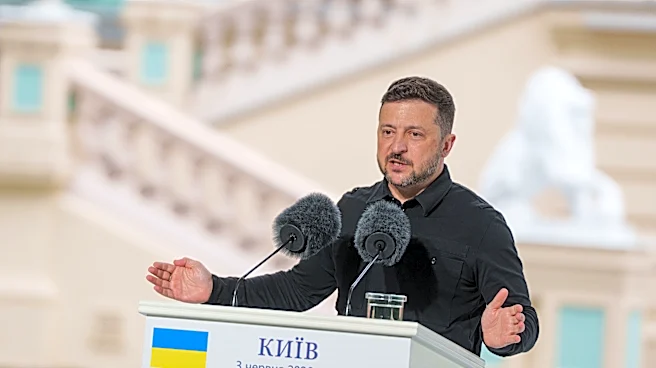
approximately 15 kilometers from Chernobyl. According to Ukraine's General Staff, an 'enemy' UAV struck the facility's Container Reception Building, causing a fire that was extinguished by emergency crews. Ukrainian President Volodymyr Zelensky condemned the attack, describing it as a 'vile' strike on critical nuclear infrastructure. The Ukrainian Ministry of Energy reported that the strike caused partial damage to the building and ignited a fire covering roughly 40 square meters. Despite the damage, radiation levels remained within normal limits. The International Atomic Energy Agency (IAEA) has been informed and plans to assess the situation.
Why It's Important?
The attack on the nuclear facility near Chernobyl raises significant concerns about nuclear safety and the potential for environmental catastrophe. The Chernobyl site, infamous for the 1986 nuclear disaster, remains a sensitive area due to the presence of radioactive materials. The incident underscores the risks associated with military activities near nuclear sites, which could lead to widespread contamination and long-term environmental damage. The international community is likely to scrutinize this event closely, as it highlights the dangers of military conflicts involving nuclear infrastructure. The IAEA's involvement indicates the seriousness of the situation, as attacks on nuclear facilities contravene key safety principles. This development could lead to increased international pressure on Russia and calls for enhanced protective measures for nuclear sites in conflict zones.
What's Next?
The IAEA is expected to conduct an assessment of the damage at the Chernobyl facility to determine the impact of the drone strike. Ukraine has called for increased international pressure on Russia to prevent further incidents. The international community may respond with diplomatic measures or sanctions to address the threat to nuclear safety. Additionally, there could be discussions on enhancing the protection of nuclear sites in conflict areas to prevent similar occurrences in the future. The situation remains fluid, and further developments are anticipated as more information becomes available.
Beyond the Headlines
The incident highlights the broader implications of military conflicts involving nuclear sites, raising ethical and legal questions about the conduct of warfare. The potential for environmental disaster due to military actions near nuclear facilities could lead to calls for international agreements to protect such sites. The attack also underscores the vulnerability of critical infrastructure in conflict zones, prompting discussions on the need for robust security measures. The long-term impact on regional stability and environmental safety remains a concern, as the incident could set a precedent for future conflicts involving nuclear sites.