
What's Happening?
The European Union and Ukraine have intensified their sanctions against entities involved in the Russian oil trade. The EU's Council has targeted traders and operators linked to Russian state-owned oil companies,
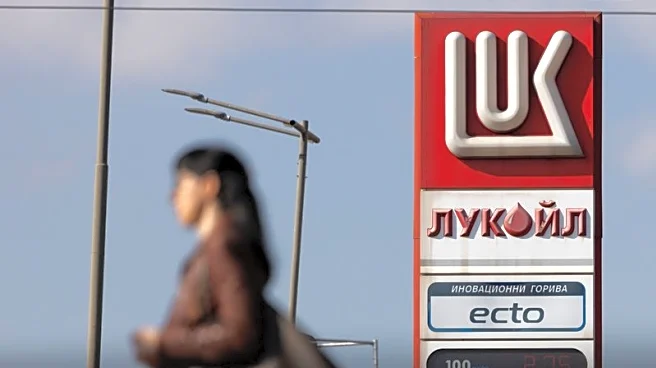
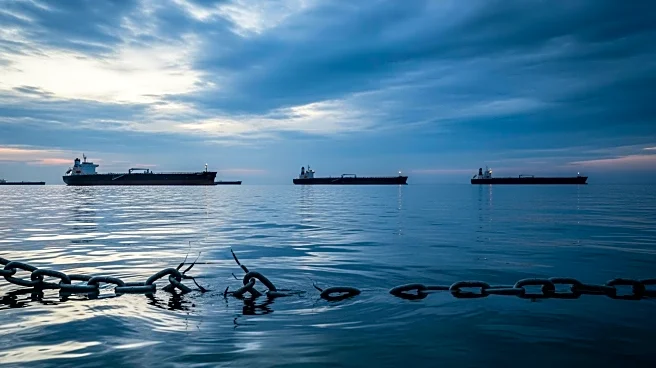
Rosneft and Lukoil, by adding nine 'shadow fleet enablers' to its sanctions list. These entities, based in the UAE, Vietnam, and Russia, are accused of engaging in high-risk shipping practices to transport crude oil and petroleum products. Meanwhile, Ukraine has sanctioned nearly 700 vessels, a significant portion of the shadow fleet, as part of its efforts to cut off funds that support the ongoing conflict. Ukrainian President Volodymyr Zelenskyy emphasized the importance of these measures in pressuring Russia to engage in peace negotiations.
Why It's Important?
These sanctions are a strategic move to undermine Russia's oil revenue, a critical source of funding for its military operations. By targeting the shadow fleet and associated traders, the EU and Ukraine aim to disrupt the logistics and financial networks that sustain the Russian oil trade. This could potentially weaken Russia's economic position and force it to reconsider its stance in the ongoing conflict. The sanctions also reflect a broader international effort to isolate Russia economically and diplomatically, increasing pressure on the country to seek a resolution to the war.
What's Next?
The EU is expected to expand its sanctions list, potentially adding at least 40 more tankers. This continued pressure may lead to further diplomatic and economic isolation of Russia. The effectiveness of these sanctions will depend on the international community's ability to enforce them and prevent circumvention. Additionally, the response from Russia and its allies will be crucial in determining the future dynamics of the conflict and the global oil market.