


What's Happening?
The U.S. Department of Energy (DOE) is making significant progress in the deactivation of former uranium enrichment facilities at its Paducah Site in Kentucky. Following the successful removal of 497 converters from the C-333 Process Building earlier
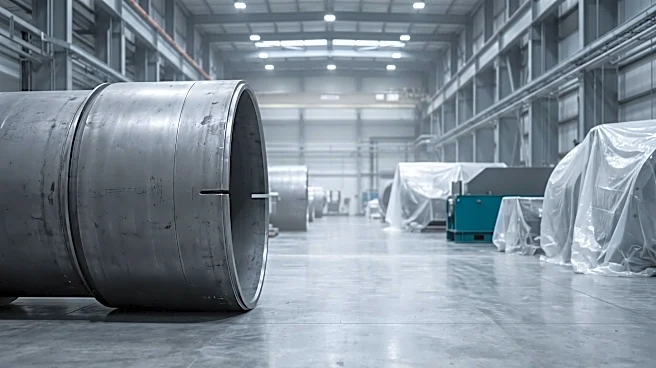
this year, workers have now segmented the first fissile converter from the C-337 Process Building. This marks a crucial milestone in the ongoing cleanup efforts, as crews are tasked with segmenting nearly 500 fissile converters in this building. Each converter is approximately twice the size of a standard cement mixer drum and was integral to legacy uranium enrichment operations. Segmentation involves removing, cutting, and downsizing these large converters, a process that requires specialized skills and dedication from the workforce. This initiative is part of a broader mission to clean up the site and prepare it for future opportunities, as stated by Paducah Site Federal Project Director William Wessel.
Why It's Important?
The cleanup of former uranium enrichment facilities, such as the Paducah Site, is vital for environmental protection and public safety in the United States. These sites contain hazardous materials that pose long-term risks if not properly managed and disposed of. The segmentation of fissile converters is a complex and critical step in deactivating these facilities, reducing the volume of radioactive waste, and making it safer for transport and storage. This ongoing work demonstrates the DOE's commitment to addressing the environmental legacy of past nuclear operations. Successful completion of these cleanup missions can free up land for other uses, mitigate potential health hazards for nearby communities, and ensure compliance with environmental regulations. The progress at Paducah also highlights the specialized expertise and advanced techniques required for nuclear waste management, contributing to the nation's overall capabilities in this field.
What's Next?
The crews at the Paducah Site will continue the segmentation of the remaining fissile converters in the C-337 Process Building. This extensive task will involve the systematic removal, cutting, and downsizing of hundreds of these large components. Concurrently, the removal of certain process gas equipment from their installed locations will also proceed. The successful execution of these steps is essential for the overall deactivation of the former uranium enrichment facilities. The DOE's Office of Environmental Management will likely continue to monitor progress closely, ensuring that all operations are conducted safely and efficiently. The ultimate goal is to complete the cleanup mission, which will involve further stages of decontamination, decommissioning, and waste disposal, ultimately positioning the site for future uses and ensuring long-term environmental stewardship.
Beyond the Headlines
The cleanup efforts at the Paducah Site extend beyond immediate environmental remediation; they represent a significant investment in the long-term health and economic well-being of the region. The specialized skills required for such complex operations often lead to the development of a highly trained workforce, fostering local employment and expertise in nuclear waste management. Furthermore, the successful deactivation of these facilities can alleviate public concerns regarding environmental contamination and enhance trust in government agencies responsible for managing nuclear legacies. The lessons learned and technologies developed during this cleanup can also inform future environmental remediation projects across the nation and potentially internationally, contributing to a broader understanding of how to safely manage and dispose of hazardous materials from industrial and defense activities. This ongoing work underscores the ethical responsibility to address the environmental consequences of historical industrial practices.