


What's Happening?
In Washington D.C., historians, preservationists, and activists are employing augmented reality (AR) and other creative methods to challenge President Trump's ongoing renovations and his administration's efforts to reshape historical narratives. Public
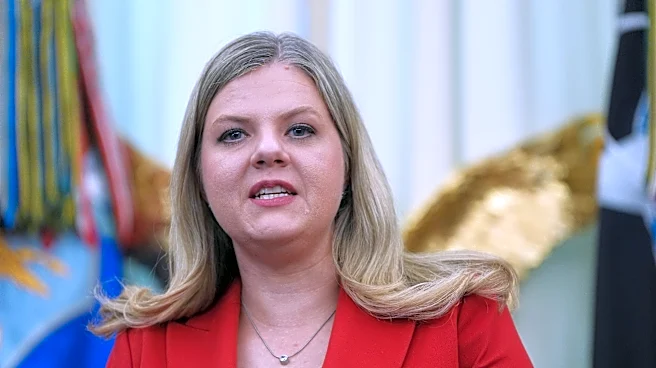
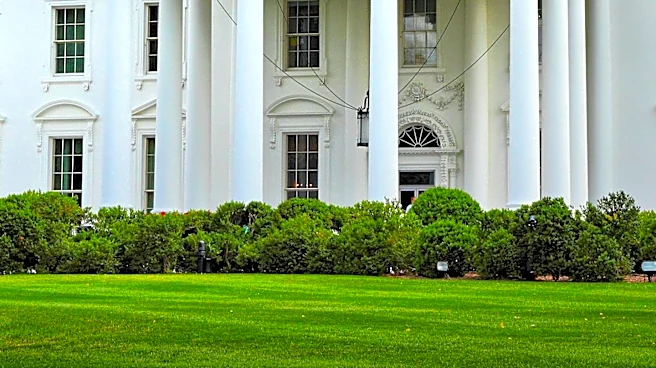
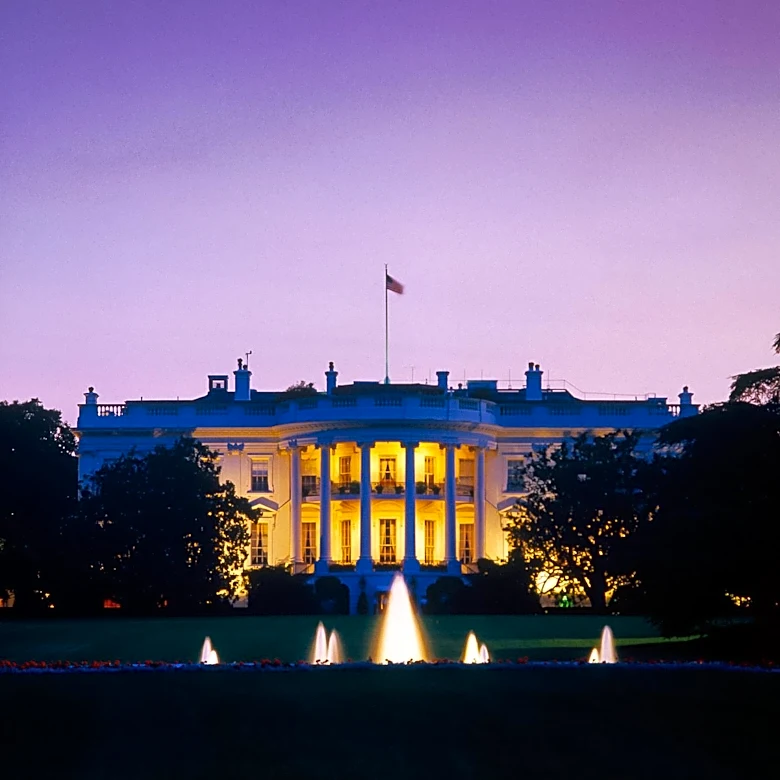
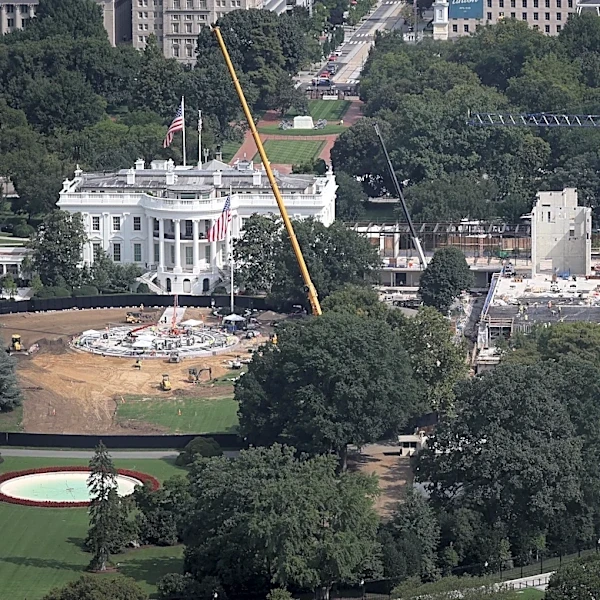
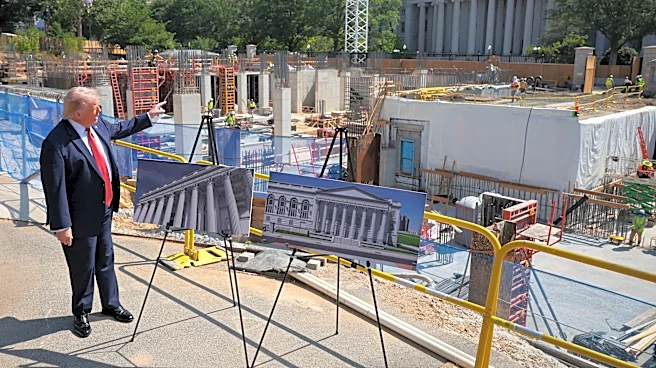
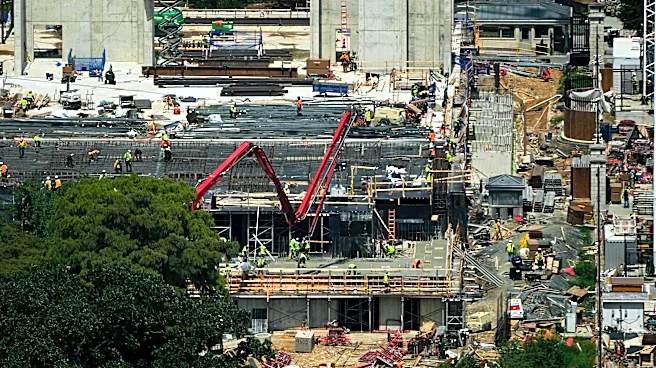
historian Lexi Cleveland, executive vice president of ARtGlass, is leading AR tours of the White House East Wing, allowing visitors to see historical images of features removed by President Trump, such as the Jacqueline Kennedy Garden and the White House Family Theater. These tours also visualize President Trump's broader plans for transforming Washington D.C., including the Reflecting Pool and the Triumphal Arch. This initiative comes as President Trump's ballroom construction at the White House East Wing proceeds, with its fate awaiting a Supreme Court decision. The White House has also issued an executive order calling on the National Park Service to place signs outside the National Museum of American History, directing visitors to 'accurate information' about the nation's past and mounting its own exhibit on Declaration of Independence signatories, whom the White House claims are underrepresented. This move is a direct response to the White House's assertion that the museum is subject to 'ideological capture' by a 'radical activist cohort.'
Why It's Important?
This development highlights a significant cultural and political struggle over the interpretation and presentation of American history in public spaces, particularly in the nation's capital. President Trump's administration is actively seeking to reframe historical narratives within Washington's museums and through physical alterations to landmarks, reflecting a desire for a 'simple, sweeping narrative of grandeur.' Conversely, historians and activist groups are pushing for a more diverse and inclusive understanding of history, emphasizing stories that have been marginalized or overlooked. The use of augmented reality technology by groups like ARtGlass and the Smithsonian American Women's History Museum's 'Unhidden Heroines' exhibit demonstrates an innovative approach to public education and counter-narrative creation. This clash over historical memory has implications for public discourse, national identity, and the role of cultural institutions in shaping collective understanding. The White House's direct intervention with the National Park Service regarding the National Museum of American History sets a precedent for governmental influence over historical interpretation, potentially impacting academic freedom and the independence of cultural institutions.
What's Next?
The AR tours led by Lexi Cleveland are set to expand, with plans to engage larger groups and mediate debates on historical interpretation. Citizen Historians for the Smithsonian, a group formed to archive material and counter potential alterations to exhibits, plans to send docents to 'interpret' the signage that President Trump is adding to the National Mall. This group is preparing instructions for volunteers on how to address various topics that may arise during these interpretations. The Smithsonian American Women's History Museum's AR exhibit, 'Unhidden Heroines,' will continue to highlight the contributions of women associated with major monuments, offering an alternative perspective to traditional historical representations. The Supreme Court's decision regarding President Trump's ballroom construction at the White House East Wing will also be a critical next step, determining the fate of that specific renovation. These ongoing efforts suggest a sustained period of contention and creative resistance regarding historical narratives and public memory in Washington D.C.
Beyond the Headlines
The conflict over historical narratives in Washington D.C. extends beyond immediate political disagreements, touching upon fundamental questions of national identity and the power of public memory. The administration's push for a particular historical interpretation, coupled with physical changes to historical sites, reflects a broader attempt to control the symbols and stories that define the nation. The response from historians and activists, particularly through the innovative use of augmented reality, signifies a shift in how historical discourse can be engaged and contested in the digital age. This technological approach allows for the overlaying of multiple historical layers onto physical spaces, making visible what has been erased or ignored. The debate also raises ethical considerations about the preservation of historical integrity versus the right of an administration to implement its vision for public spaces. The long-term implications could include a more dynamic and contested public sphere for historical interpretation, where technology plays an increasingly central role in shaping how citizens interact with and understand their past.