
What's Happening?
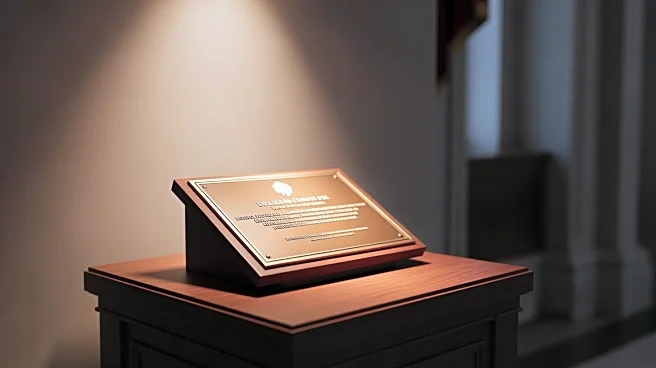
The U.S. Senate has agreed to display a plaque honoring the police officers who defended the Capitol during the January 6, 2021, attack. This decision comes despite opposition from House Speaker Mike Johnson,
who argued that the commemorative memorial does not comply with legal requirements. The Senate's action was swift, with no objections from senators, and was led by Republican Senator Thom Tillis of North Carolina and Democratic Senators Jeff Merkley of Oregon and Alex Padilla of California. The plaque, which was approved by Congress over three years ago, had not been installed at the Capitol, prompting many House lawmakers to display replicas outside their offices. The Senate's decision is partly motivated by a shifting narrative from President Trump's administration regarding the events of January 6, with recent statements and reports attempting to shift blame for the riot. The plaque is intended to be placed at the West front of the Capitol, where intense fighting occurred, but will be temporarily displayed in a publicly accessible location in the Senate wing until a permanent agreement with the House is reached.
Why It's Important?
The decision to display the plaque is significant as it underscores the ongoing political and historical debate surrounding the events of January 6, 2021. The plaque serves as a symbol of recognition for the law enforcement officers who played a crucial role in protecting the Capitol and ensuring the continuation of the democratic process. The Senate's action highlights a bipartisan commitment to acknowledging the sacrifices made by these officers, despite attempts to alter the narrative of the events. This move may influence public perception and historical records of the January 6 attack, reinforcing the importance of transparency and accountability in government actions. The decision also reflects broader tensions between the legislative branches and the executive branch, particularly in how historical events are interpreted and commemorated.
What's Next?
The next steps involve the Architect of the Capitol working to prominently display the plaque in a temporary location until a permanent site is agreed upon with the House. The ongoing legal and political discussions may continue as stakeholders, including law enforcement agencies and political leaders, navigate the implications of the plaque's display. The resolution of this issue could set a precedent for how similar commemorative actions are handled in the future, particularly in politically sensitive contexts. Additionally, the digital component mentioned by Senator Tillis, which will list the names of all officers involved, may be developed to complement the physical plaque, providing a comprehensive acknowledgment of the officers' contributions.