
What's Happening?
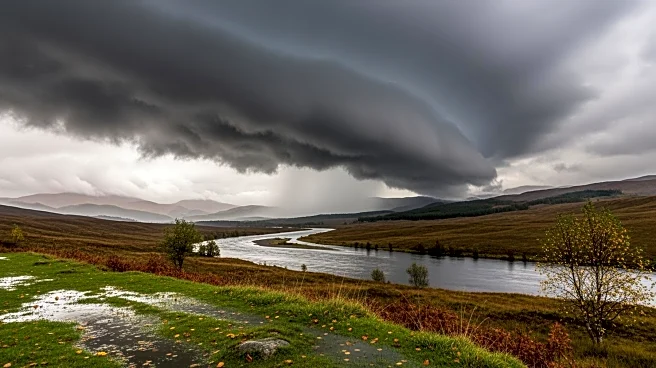
Scotland is currently facing severe weather conditions as forecasters have issued an amber rain warning for the southwest region. This alert, which began at midnight, is expected to bring 50-70mm of rain, with some areas like the Galloway Hills potentially
receiving up to 130mm. The heavy rainfall poses significant flood risks, with fast-flowing water threatening homes and businesses. The Met Office has also issued yellow weather warnings for other parts of the country, including Glasgow, Fife, and Stirling. These warnings are set to last until the end of Sunday or 9:00 AM on Monday, depending on the area. The Scottish Environment Protection Agency has issued 10 flood alerts, and ScotRail has preemptively canceled services between Kilmarnock and Dumfries. Authorities are advising against unnecessary travel, and a multi-agency response group is coordinating efforts to manage the situation.
Why It's Important?
The severe weather conditions in Scotland highlight the increasing frequency and intensity of extreme weather events, which can have significant impacts on infrastructure, public safety, and the economy. The potential for flooding poses a direct threat to homes and businesses, leading to possible economic losses and disruptions in daily life. The transportation network is particularly vulnerable, with road closures and train cancellations affecting mobility and logistics. This situation underscores the need for robust emergency preparedness and response strategies to mitigate the impacts of such weather events. Additionally, it raises awareness about the broader implications of climate change and the necessity for sustainable environmental policies.
What's Next?
As the weather system progresses, authorities will continue to monitor the situation closely. The Scottish government's transport secretary has advised the public to plan their journeys carefully and stay informed about travel conditions. Emergency services and local councils are on high alert, ready to respond to any incidents. The public is encouraged to stay updated through official channels and heed safety advice. In the longer term, this event may prompt discussions on improving infrastructure resilience and enhancing flood defense systems to better cope with future weather challenges.