





What's Happening?
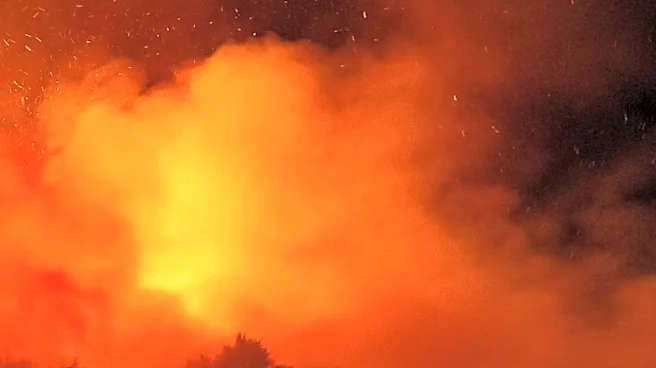
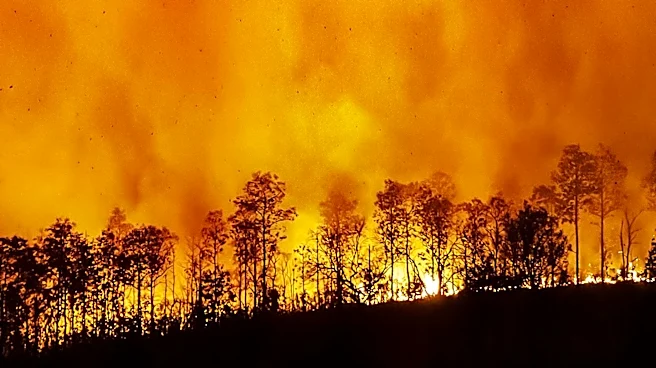
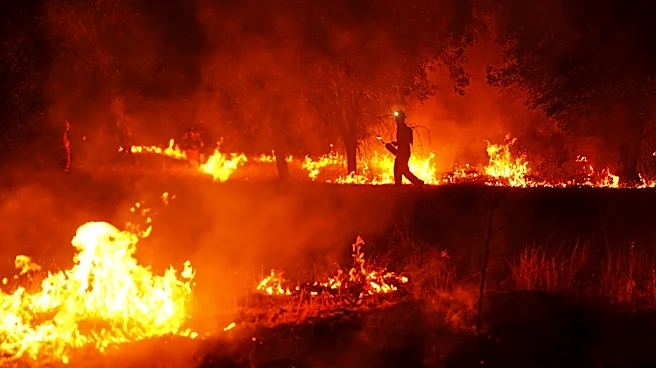
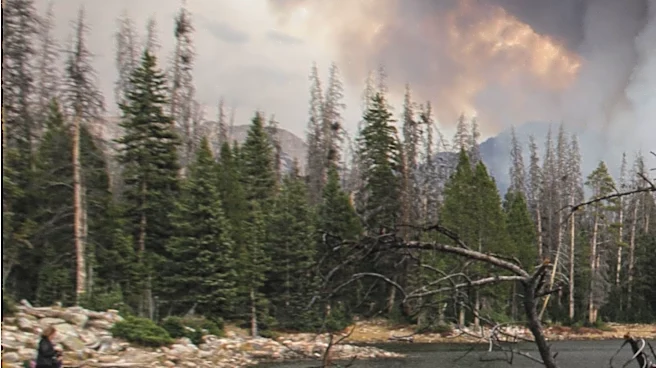
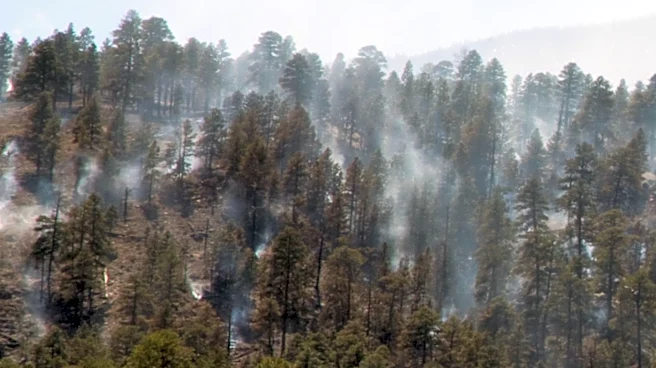
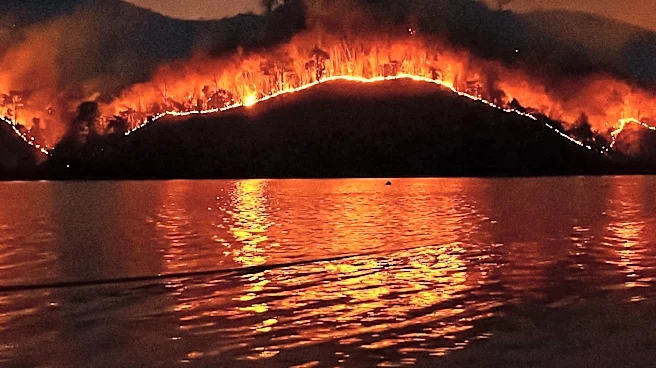
In France, a human-made forest is at the center of raging wildfires, exacerbated by climate change. The forest, planted in the mid-1800s under Napoleon III to support industrial activity, lacks natural obstacles that could slow the fire's advance. As
a result, firefighters are struggling to contain the blazes, which have led to the evacuation of over 250,000 people. The fires have created their own weather systems, further complicating firefighting efforts. Experts emphasize the role of climate change in intensifying these conditions, as extreme heat and drought become more common.
Why It's Important?
The situation in France highlights the long-term consequences of land-use decisions and the increasing impact of climate change on natural disasters. The lack of natural firebreaks in human-made forests makes them particularly vulnerable to wildfires. This underscores the need for sustainable land management practices and the restoration of natural ecosystems to mitigate future risks. The economic and social costs of such fires are significant, affecting communities, infrastructure, and local economies.
What's Next?
France and other European countries may need to reassess their land management strategies, focusing on restoring natural ecosystems and implementing fire-resistant landscaping. Policymakers might also consider investing in advanced firefighting technologies and cross-border cooperation to enhance their response capabilities. Public awareness campaigns could be crucial in promoting preventive measures and reducing human-caused fire risks.