




What's Happening?
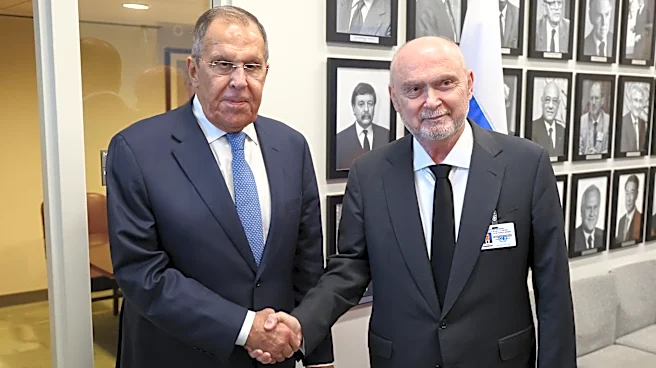
Russia's Deputy Minister of Culture, Andrey Malyshev, and Cuba's Deputy Minister of Culture, Lizette Martinez Luzardo, have agreed to enhance bilateral exchanges in the fields of culture and sport. This agreement was reached during a meeting of the working
group on culture and sport of the Russian-Cuban Intergovernmental Commission for Trade, Economic, Scientific and Technical Cooperation, held during the 12th St. Petersburg International United Cultures Forum. The parties signed minutes confirming the potential for further development of these exchanges. Specific areas of focus include inter-museum collaborations, such as between the State Russian Museum and the National Museum of Fine Arts of Cuba, which already hosts a virtual branch of the Russian museum. Additionally, plans are in place to expand the exchange of archival films between the Gosfilmofond State Film Archive and the Cuban Institute on Cinematographic Arts and Industry, and to foster cooperation in animation. The initiative also aims to continue dialogue in creative education, implementing projects between relevant educational institutions in both countries and increasing the participation of Cuban students in Russian creative university programs.
Why It's Important?
This strengthened cultural and sports cooperation between Russia and Cuba signifies a deepening of ties between the two nations, potentially impacting their international relations and soft power projection. For Russia, expanding cultural influence can serve as a diplomatic tool, fostering goodwill and creating alliances in a complex global landscape. For Cuba, these exchanges offer opportunities for cultural enrichment, educational advancement, and access to Russian expertise and resources in arts and sports. The collaboration in creative education could lead to a brain drain from Cuba or, conversely, an influx of new ideas and skills that benefit its cultural sectors. Economically, while not directly a trade agreement, cultural tourism and educational exchanges can indirectly stimulate economic activity. The emphasis on inter-museum exchanges and film archives also highlights an effort to preserve and share cultural heritage, which can have long-term societal benefits for both countries by promoting mutual understanding and appreciation of their respective histories and artistic expressions.
What's Next?
Following the signing of the minutes, the next steps will involve the implementation of the agreed-upon initiatives. This includes actively pursuing inter-museum exchanges, with a focus on collaborations between the State Russian Museum and the National Museum of Fine Arts of Cuba. The Gosfilmofond State Film Archive and the Cuban Institute on Cinematographic Arts and Industry are expected to proceed with expanding their archival film exchanges and developing joint animation projects. In the realm of creative education, both countries will work towards establishing and executing projects between their respective educational institutions. This will likely involve identifying specific programs and universities for collaboration and facilitating the enrollment of Cuban students in Russian creative universities. The ongoing dialogue and working group meetings will continue to monitor progress and identify new avenues for cooperation, ensuring the sustained development of these bilateral exchanges in culture and sport.
Beyond the Headlines
Beyond the immediate cultural and sports exchanges, this agreement could have broader geopolitical implications. It reinforces the historical alliance between Russia and Cuba, potentially signaling a united front on certain international issues or a desire to counter Western influence. The focus on cultural and educational ties can be seen as a long-term strategy to build deeper societal connections, fostering a sense of shared identity or purpose among future generations. This 'soft diplomacy' can be more enduring than purely economic or political agreements. Furthermore, the emphasis on creative education and animation could lead to the development of new artistic movements or cultural products that blend Russian and Cuban influences, enriching global culture. However, it also raises questions about potential ideological alignment and the extent to which these cultural exchanges might be used to promote specific political narratives, particularly in the context of current international tensions.