






What's Happening?
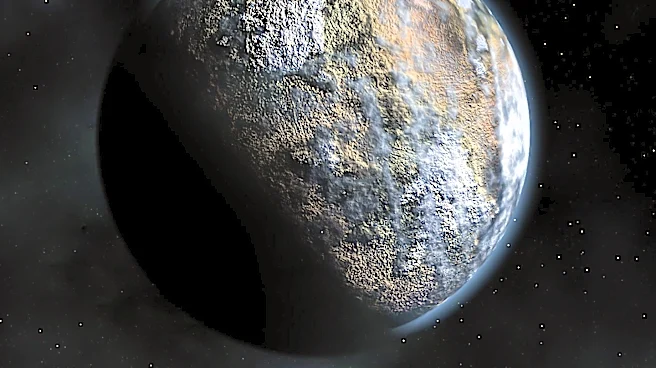
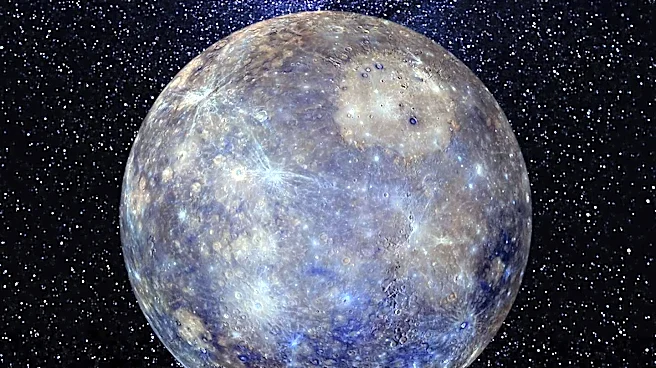
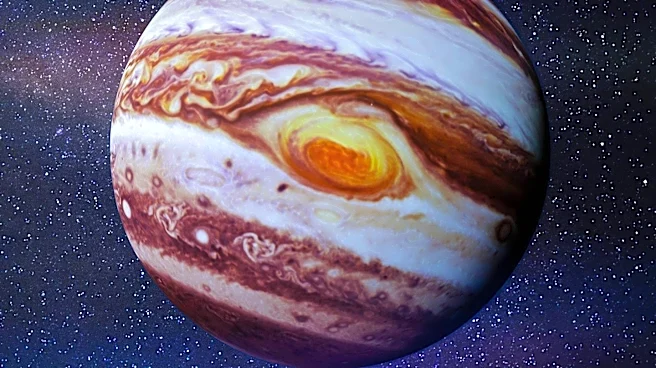
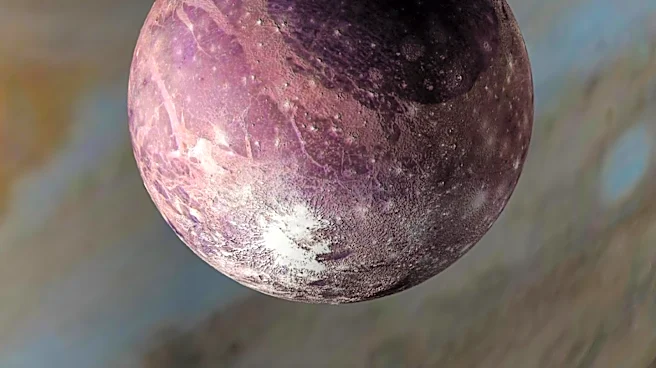
Ganymede, Jupiter's largest moon, exhibits characteristics that make it more akin to a planet than a conventional moon. It is larger than Mercury, possesses a magnetic field, and may contain more water than Earth's surface. Despite these planet-like qualities,
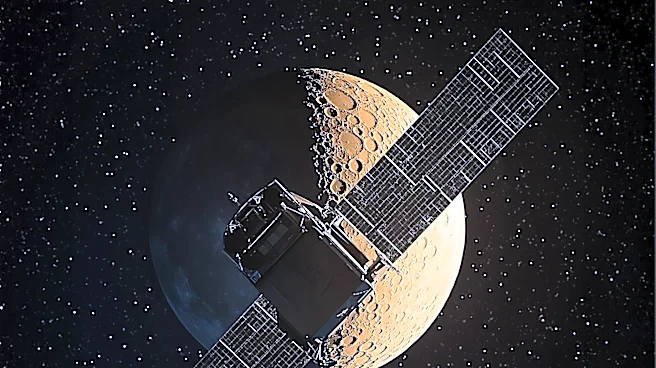
Ganymede remains physically bound to Jupiter, showcasing the complexity a satellite can achieve while orbiting a larger system. The European Space Agency's JUICE mission is set to explore Ganymede further, treating it as a system rather than a single target. The mission aims to probe the moon's icy shell, magnetic field, and geological features, providing insights into its structure and history.
Why It's Important?
Ganymede's unique attributes offer valuable insights into the formation and evolution of celestial bodies in the Solar System. Understanding its magnetic field and water content could have implications for the study of other moons and planets, particularly in the search for extraterrestrial life. The JUICE mission's findings could enhance our knowledge of planetary science and contribute to the broader understanding of how moons can develop complex systems while remaining part of a larger planetary system. This research could also inform future exploration missions and the search for habitable environments beyond Earth.
What's Next?
The JUICE mission, scheduled to reach Jupiter in 2031, will conduct detailed observations of Ganymede, focusing on its magnetic field, ice layers, and geological features. These studies are expected to provide a comprehensive understanding of the moon's structure and its interactions with Jupiter's magnetic environment. The mission's findings could lead to new theories about the formation of moons and their potential to host life. Additionally, the data collected may influence future exploration strategies and the development of technologies for studying other celestial bodies.