
What's Happening?
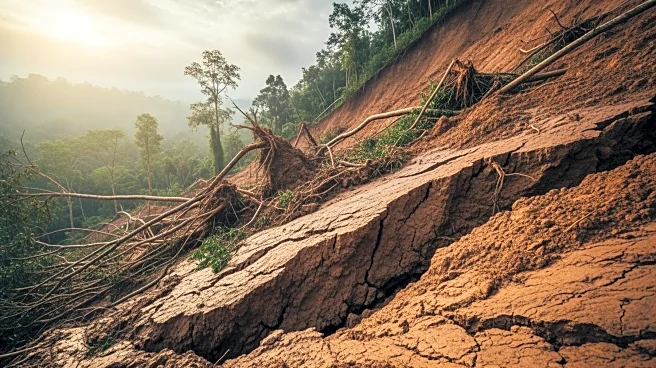
A devastating landslide triggered by torrential rains on Indonesia's main island of Java has resulted in the deaths of at least 11 people, with 79 others still missing. The landslide occurred in the early
hours of Saturday, sweeping down the slopes of Mount Burangrang in West Java province and burying approximately 34 houses in the village of Pasir Langu. Rescue operations are ongoing, with teams struggling against mounds of mud and unstable ground conditions. The Indonesian National Search and Rescue Agency (Basarnas) has been using drones, K-9 units, and ground teams to locate survivors, although heavy equipment remains largely unused due to the soft terrain. Vice President Gibran Rakabuming Raka visited the affected area, pledging government action to prevent future disasters and urging local authorities to address land conversion issues in disaster-prone areas.
Why It's Important?
The landslide highlights the vulnerability of Indonesia to natural disasters, particularly during the rainy season from October to April. The incident underscores the need for improved disaster preparedness and land management practices in the region. With millions of Indonesians living in mountainous or flood-prone areas, the risk of similar events remains high. The disaster also poses significant challenges for local authorities and rescue teams, who must navigate difficult terrain and adverse weather conditions to conduct search and rescue operations. The government's response and future preventive measures will be crucial in mitigating the impact of such disasters on communities and infrastructure.
What's Next?
Rescue efforts will continue as authorities strive to locate the missing individuals and provide aid to those affected. The government is expected to implement measures to address land conversion and improve disaster risk management in vulnerable areas. This may involve stricter regulations on land use and increased investment in infrastructure to withstand natural disasters. The situation also calls for enhanced community awareness and preparedness programs to ensure that residents are better equipped to respond to emergencies. The international community may offer support and expertise to assist Indonesia in its recovery and prevention efforts.