
What's Happening?
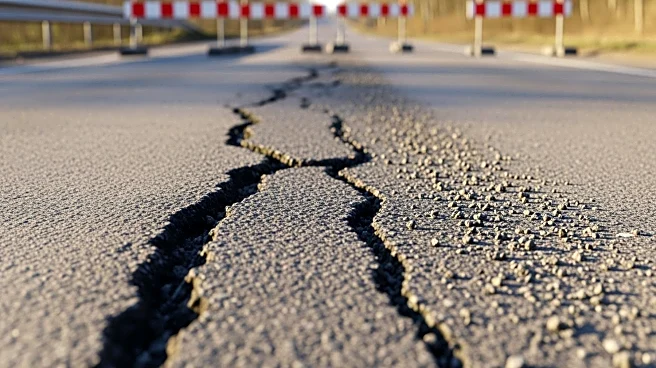
A significant landslip risk has led to the planned closure of the A469 road in Caerphilly County, Wales, for up to two years. The road, which has been under temporary traffic measures since 2020, is set
to undergo essential repairs to prevent a life-threatening landslip. The project, delayed until autumn, is expected to cost at least £20 million. Increased rainfall and land movement, exacerbated by Storm Dennis in 2020, have heightened the risk of a catastrophic slip, which could endanger lives, properties, and a mains water supply. Local business owners express concern over the potential loss of trade due to the closure, as the road is a vital connection for communities in the upper Rhymney valley.
Why It's Important?
The closure of the A469 road is crucial for ensuring public safety and maintaining essential infrastructure in Caerphilly County. The decision to proceed with the repairs reflects the urgent need to address the risks posed by the unstable land, which has been a concern for over a decade. The project highlights the broader challenges of maintaining infrastructure in areas prone to natural hazards, particularly in regions with a history of heavy coal mining. The economic impact on local businesses, which rely on passing trade, underscores the delicate balance between safety and economic vitality. The situation serves as a reminder of the importance of proactive infrastructure management in mitigating the effects of climate change and extreme weather events.
What's Next?
The Caerphilly council plans to appoint an engineering contractor in early 2026 to carry out the necessary repairs. In the meantime, local businesses and residents will need to adapt to the disruptions caused by the road closure. Alternative routes and traffic management measures will be essential to minimize the impact on daily commutes and local commerce. The council's commitment to addressing the landslip risk may prompt further discussions on long-term infrastructure resilience and investment in the region. Stakeholders, including local government and business owners, will likely engage in ongoing dialogue to ensure that the community's needs are met during the repair process.