







What's Happening?
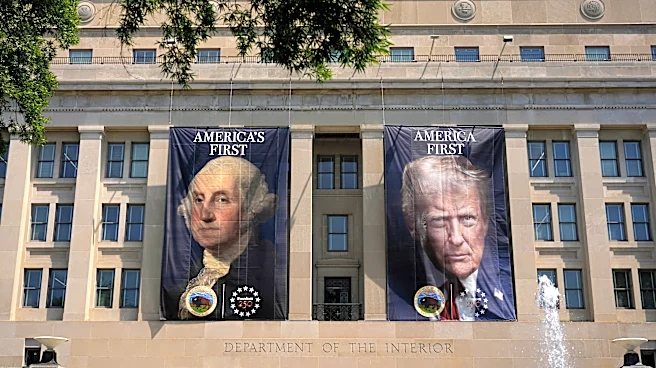
Historians have expressed significant criticism towards the Freedom 250 exhibits, a project led by President Trump to commemorate the 250th anniversary of the United States. The exhibits, which include AI-generated avatars of historical figures like George
Washington and John Adams, have been accused of promoting a skewed version of American history. Critics argue that the project, supported by entities such as PragerU and Hillsdale College, presents a triumphalist narrative that aligns with the Trump administration's political agenda. The exhibits have been criticized for omitting critical aspects of history, such as the role of slavery and the contributions of Native American tribes, while overemphasizing the influence of Christianity. Additionally, some content on the Freedom 250 website appears to be fabricated, further undermining the project's credibility.
Why It's Important?
The controversy surrounding the Freedom 250 exhibits highlights the ongoing debate over how American history should be taught and commemorated. The project has sparked concerns about the use of AI in historical education, with fears that it could distort historical facts and undermine research integrity. The criticism also reflects broader tensions between different interpretations of history, particularly regarding issues of race, class, and the nation's founding principles. The project has been seen as an attempt to align historical narratives with current political ideologies, raising questions about the role of government in shaping public understanding of history. This debate has significant implications for educational policy and the preservation of historical accuracy in public discourse.
What's Next?
As the Freedom 250 project continues, it is likely to face ongoing scrutiny from historians and educators. The debate may prompt further discussions about the ethical use of AI in historical education and the responsibilities of educational institutions in presenting accurate historical narratives. There may also be increased calls for transparency and accountability in government-led commemorative projects. The controversy could influence future educational policies and initiatives, particularly those related to the teaching of American history in schools. Stakeholders, including historians, educators, and policymakers, may need to collaborate to ensure that historical education remains accurate and inclusive.
Beyond the Headlines
The Freedom 250 controversy underscores the complex relationship between history, politics, and technology. The use of AI to create historical narratives raises ethical questions about authenticity and the potential for technology to reshape public perceptions of history. The project also highlights the cultural and ideological divides in how history is interpreted and taught, reflecting broader societal debates about national identity and values. As technology continues to evolve, there will be ongoing challenges in balancing innovation with the preservation of historical integrity. This situation serves as a reminder of the importance of critical engagement with historical narratives and the need for diverse perspectives in understanding the past.