



What's Happening?
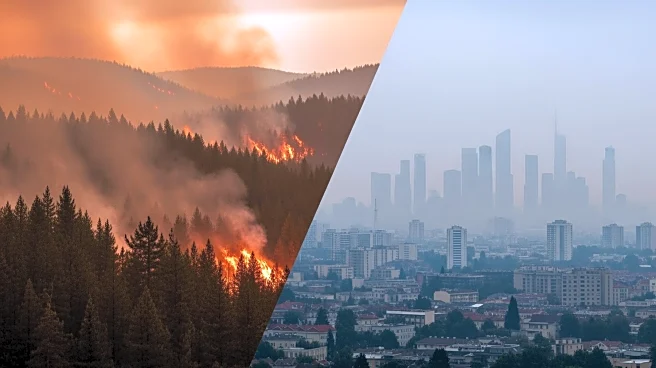
A recent study published in Nature highlights the divergent trends in demographic and socioeconomic inequalities related to global exposure to wildfires, heatwaves, and pollution. The research utilizes data from various sources, including satellite observations
and socioeconomic datasets, to assess how different populations are affected by these environmental hazards. The study finds significant spatial heterogeneity in exposure, with certain regions experiencing increased fire frequency and pollution levels. It also examines the inequality in exposure distribution, using metrics like the Gini index to quantify disparities. The findings suggest that lower-income populations are disproportionately affected by these hazards, raising concerns about environmental justice.
Why It's Important?
The study's findings underscore the need for targeted interventions to address environmental inequalities. As climate change exacerbates the frequency and intensity of natural hazards, vulnerable populations are at greater risk. Understanding the distribution of exposure can inform policy decisions and resource allocation to protect at-risk communities. The research highlights the intersection of environmental and socioeconomic factors, emphasizing the importance of integrating equity considerations into climate adaptation strategies. Addressing these disparities is crucial for achieving sustainable development goals and ensuring that all communities can withstand the impacts of climate change.
What's Next?
The study calls for further research to explore the mechanisms driving these inequalities and to develop strategies for mitigating their impact. Policymakers are encouraged to incorporate the study's insights into climate resilience planning, focusing on reducing exposure for vulnerable populations. International collaboration may be necessary to address transboundary pollution and coordinate efforts to combat climate change. The findings also suggest a need for improved data collection and analysis to monitor changes in exposure patterns and inform adaptive measures.