
What's Happening?
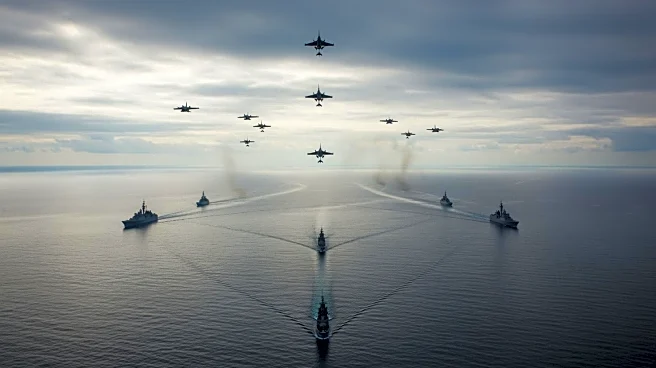
China has concluded a series of military drills around Taiwan, which included live-fire exercises aimed at simulating a blockade of key ports and assaults on maritime targets. The exercises, named 'Justice
Mission 2025', involved the deployment of missiles, fighter jets, navy ships, and coastguard vessels. These actions have been described by Taiwan as 'highly provocative and reckless'. The drills come in the wake of significant arms sales to Taiwan by the United States and comments from Japan's prime minister suggesting a potential military response to any force used against Taiwan. China's People's Liberation Army stated that the exercises were successful and emphasized their intent to thwart any attempts at Taiwan's independence.
Why It's Important?
The military exercises underscore the ongoing tensions between China and Taiwan, with significant implications for regional stability and international relations. Taiwan's strategic position in global shipping routes means that any conflict could disrupt international trade. The drills have drawn criticism from several countries, including Japan, Australia, and the Philippines, highlighting concerns over regional peace and stability. The situation also reflects the broader geopolitical struggle involving major powers like the United States and China, with Taiwan caught in the middle. The exercises are a demonstration of China's military capabilities and its willingness to assert its claims over Taiwan, which could lead to increased military presence and potential conflicts in the region.
What's Next?
Taiwan has adjusted its defense plans to maintain an appropriate response mechanism, indicating a heightened state of alert. The international community, particularly countries in the Indo-Pacific region, may increase diplomatic efforts to de-escalate tensions. The United States, as Taiwan's main security backer, may continue to support Taiwan through arms sales and diplomatic channels. The situation could lead to further military build-up in the region, with countries like Japan potentially increasing their defense readiness. The ongoing tensions may also influence future diplomatic engagements and alliances in the Indo-Pacific region.
Beyond the Headlines
The drills highlight the complex dynamics of cross-strait relations and the broader implications for global geopolitics. China's actions are part of a larger strategy to assert its influence in the region, challenging the existing international order. The situation raises questions about the effectiveness of international diplomatic efforts to manage such conflicts and the role of multilateral organizations in maintaining peace. The drills also reflect the growing importance of military power in international relations, as countries navigate the challenges of sovereignty, territorial claims, and regional security.