


What's Happening?
Kentucky Governor Andy Beshear, who chairs the Democratic Governors Association, recently spoke in Louisville alongside other Democratic governors from Minnesota, Kansas, Washington, and Delaware. The group focused on economic issues, specifically criticizing
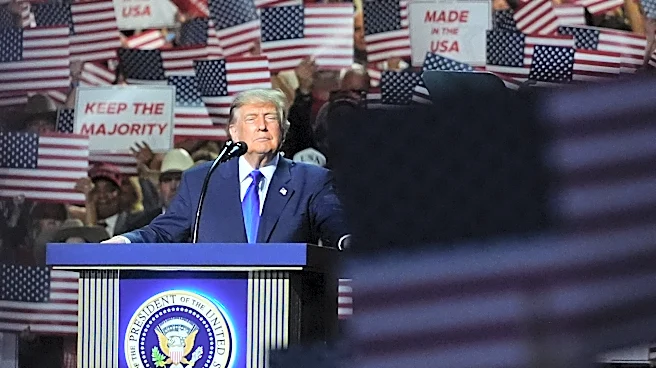
President Trump's tariffs, trade policies, and his approach to the war in Iran. Governor Beshear stated that Democrats are comfortable making the upcoming midterm elections a referendum on President Trump's second term, particularly concerning the rising costs of groceries, gas, and other everyday expenses. He directly linked these issues to President Trump's policies, urging voters to consider them when casting their ballots. Governor Beshear also announced the creation of a new 'Expand the Map' fund through the Democratic Governors Association, designed to help Democratic candidates compete in states where Republicans have traditionally held an advantage. He cited Kentucky's 6th Congressional District as an example of a potential flip for Democrats this year.
Why It's Important?
This development is significant as it signals a clear strategy by the Democratic Party to frame the upcoming midterm elections around economic issues and directly challenge President Trump's policies. By making the election a referendum on the President's second term, Democrats aim to capitalize on voter frustration over the cost of living. The 'Expand the Map' fund indicates a broader effort to expand the Democratic Party's reach beyond traditional strongholds, potentially shifting the political landscape in states previously considered reliably Republican. The criticisms from governors like Minnesota's Tim Walz regarding the relationship with Canada and Kansas's Laura Kelly concerning beef imports highlight the tangible economic impacts of current trade policies on specific U.S. industries and regions. This unified message from Democratic governors could galvanize their base and persuade undecided voters who are feeling the pinch of economic pressures, potentially leading to significant gains for Democrats in Congress.
What's Next?
As the midterm elections approach, both Democratic and Republican parties are expected to intensify their campaigns, with the economy and President Trump's policies remaining central themes. Democrats will likely continue to highlight the rising costs of goods and the perceived negative impacts of tariffs and trade policies. The 'Expand the Map' fund will be deployed to support candidates in targeted states, potentially leading to more competitive races in traditionally Republican areas. Republicans, conversely, will likely defend President Trump's economic agenda and emphasize the importance of maintaining control of Congress to support his second-term priorities. The rhetoric from both sides will likely become more pointed, with President Trump himself remaining a prominent figure in the debate, even without being on the ballot. The success of the 'Expand the Map' initiative will be closely watched as an indicator of the Democratic Party's ability to broaden its electoral appeal.
Beyond the Headlines
The Democratic strategy to make the midterm elections a referendum on President Trump's second term and his economic policies reflects a deeper political calculation. By focusing on tangible economic concerns like grocery and gas prices, Democrats are attempting to connect national policy decisions directly to the everyday lives of American citizens. This approach aims to bypass ideological divides and appeal to a broader electorate based on pocketbook issues. The 'Expand the Map' initiative also suggests a long-term strategic shift within the Democratic Party, moving away from a purely defensive posture in red states to actively contesting them. This could lead to a more competitive national political environment in future election cycles, potentially altering the balance of power in Congress and state governorships. The emphasis on trade policies and their impact on specific sectors, such as agriculture in Kansas, also underscores the complex and often localized effects of national economic decisions.