





What's Happening?
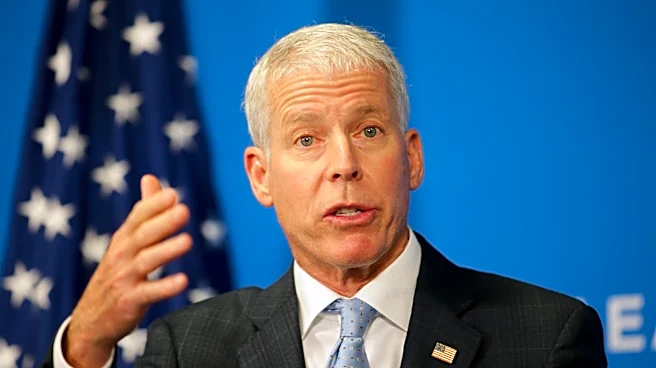
Representative Brett Guthrie (R-Ky.), Chairman of the House Committee on Energy and Commerce, along with House Speaker Mike Johnson, has moved to pass the Ratepayer Protection Act. This legislative action comes in response to growing public concerns regarding
the energy and water consumption of data centers, which are essential for artificial intelligence (AI) operations. The Act aims to require state public utility commissions to develop strategies ensuring data centers bear their own operational costs, rather than shifting these expenses to consumers. The initiative is framed as a measure to address voter anxieties about AI and data centers, particularly as these issues have become significant concerns for midterm election voters. The move is also seen as an effort to balance the need for AI innovation with responsible oversight, preventing an overreaction that could slow market forces in the rapidly developing technology sector. President Trump has also expressed support for accelerating AI growth in the U.S., emphasizing that his administration will not hinder the industry's development.
Why It's Important?
The passage of the Ratepayer Protection Act holds significant implications for both the technology sector and public utility consumers across the U.S. By mandating that data centers pay their own way, the Act could prevent potential increases in utility rates for households and businesses, addressing a key concern for voters. This approach reflects a broader debate within the U.S. about how to regulate emerging technologies like AI without stifling innovation. For the AI industry, the Act introduces a framework that could influence operational costs and site selection for data centers, potentially encouraging more energy-efficient practices or alternative energy sources. The emphasis on 'America First innovation' suggests a strategic intent to maintain U.S. leadership in AI development, while also navigating public apprehension. The involvement of key congressional figures and President Trump underscores the national importance of balancing technological advancement with economic and environmental considerations, particularly as AI becomes a more prominent issue in political discourse.
What's Next?
The Ratepayer Protection Act is being advanced before the congressional recess for midterm elections campaigning, indicating a push to address voter concerns promptly. If passed, state public utility commissions will be tasked with developing and implementing strategies to ensure data centers cover their operational costs. This could lead to new regulatory frameworks and potentially impact the financial models of AI firms and data center operators. The broader discussion around AI regulation is expected to continue, with various stakeholders, including industry leaders like Anthropic CEO Dario Amodei and OpenAI CEO Sam Altman, advocating for different approaches to safety and development pacing. President Trump's administration has signaled its intent to accelerate AI growth, which may lead to further policy initiatives aimed at fostering innovation while addressing national security concerns related to foreign competition in AI. The outcome of the midterm elections could also influence the legislative landscape for AI and data center regulation, depending on shifts in congressional power and priorities.
Beyond the Headlines
The debate surrounding the Ratepayer Protection Act and AI regulation touches upon deeper ethical and economic considerations. The rapid advancement of AI has sparked public fears, leading to calls for political action and potential 'not-in-my-backyard' reactions to data center development. This highlights a tension between technological progress and societal readiness, where the benefits of AI are weighed against perceived risks and resource demands. The Act's focus on cost allocation for data centers also brings to light the infrastructure challenges posed by AI, particularly its significant electricity and water requirements. This could accelerate the push for sustainable data center solutions and renewable energy integration. Furthermore, the differing views among industry leaders and politicians on the pace and regulation of AI development underscore a fundamental philosophical divide: whether to prioritize rapid innovation to maintain a competitive edge or to implement cautious guardrails to mitigate potential risks. This ongoing dialogue will shape not only the future of AI in the U.S. but also its broader societal integration and ethical governance.